
For decades, the Newport side of the Pell Bridge was defined by an oversized interchange built for a transportation future that never arrived. The result was a complex network of ramps and elevated roadways that complicated travel, divided nearby neighborhoods, and limited connections between downtown and the North End.
VHB helped reimagine the gateway as a more intuitive, community-focused transportation network. By supporting the replacement of obsolete highway geometry with new roadway connections, improved traffic operations, and expanded pedestrian and bicycle access, we helped create a corridor that better serves how Newport moves today.
VHB provided multidisciplinary support across highway design, traffic design, structural design, intelligent transportation systems, environmental and permitting services, track crossing coordination, and right-of-way support. As part of the work, VHB helped advance adaptive signal and ITS improvements designed to respond to Newport’s highly variable traffic conditions, improving traffic flow, reducing delay, and supporting more reliable access to and from the Pell Bridge.
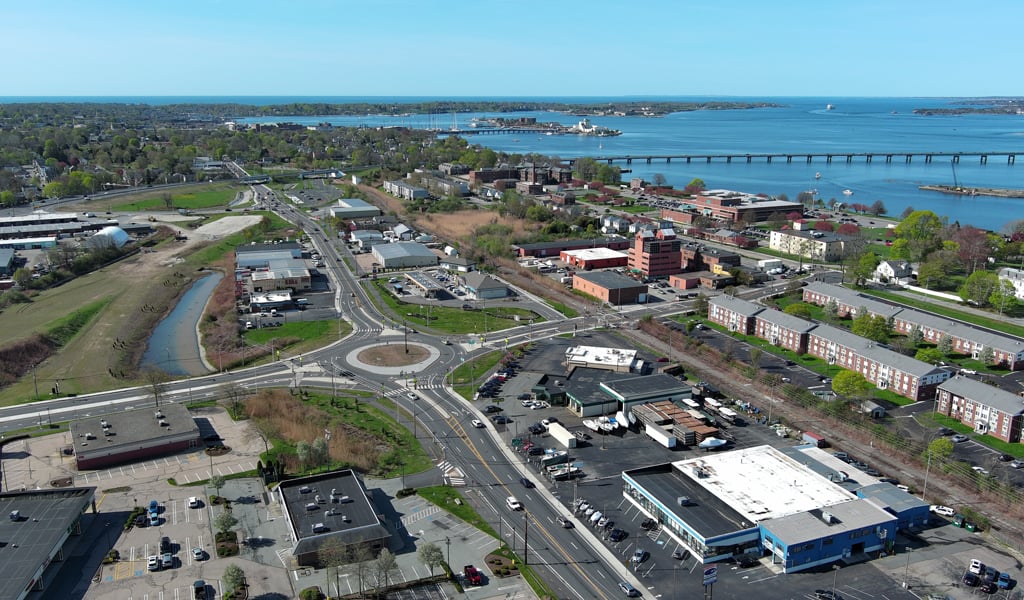
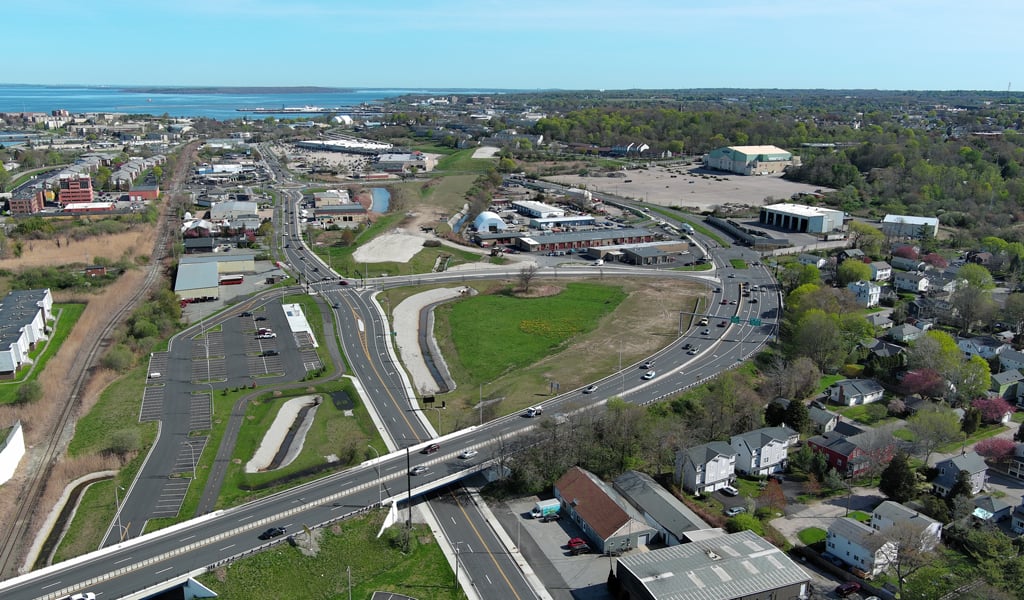
Today, the corridor functions as more than a bridge approach. It is a stronger city gateway that improves circulation, supports multimodal travel, reconnects parts of the community, and opens the door to future redevelopment.
Pell Bridge / 0:32