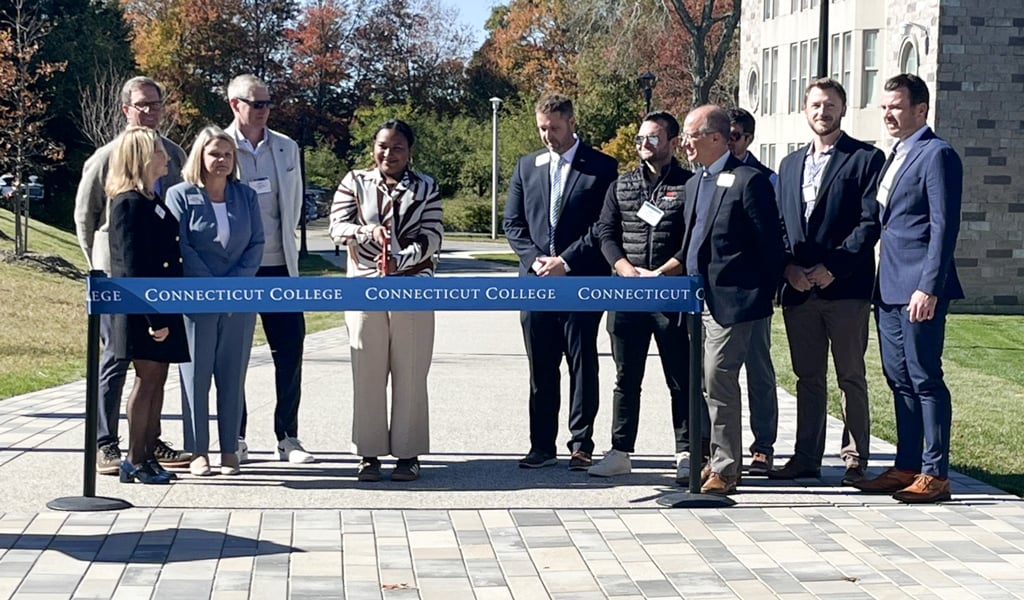
Last week, a ribbon cutting ceremony marked the official opening of the Crozier-Plex Pedestrian Connector Project at Connecticut College in New London, CT. This transformative project establishes a vibrant open space in the heart of campus that will transform the pedestrian experience, foster community, and enhance campus identity.
VHB provided civil engineering design and permitting support for the project—one of our many recent collaborations with Connecticut colleges and universities to develop open, accessible, and multimodal spaces. Our team adopted a people-first approach to campus design, strategically right-sizing parking supply while building a more walkable, better-connected campus. In addition, we delivered stormwater infrastructure improvements to improve campus resiliency and resolve recurring flooding issues.
“This project is a great example of how schools and universities are moving away from car-centered grids and becoming more people-focused, pedestrian-friendly multimodal ecosystems,” said Project Manager Rod Szwelicki.
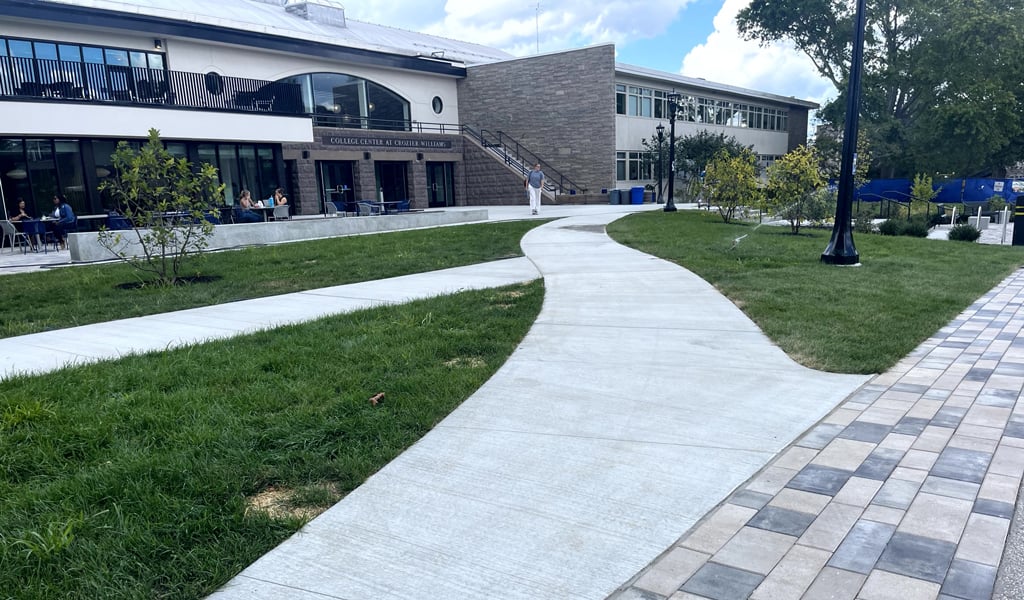
A pedestrian safety study previously identified the Crozier-Plex Pedestrian Connector Project as a key initiative to minimize pedestrian-vehicular conflict on campus. The project replaced about 1,500 linear feet of roadway between the College Center at Crozier-Williams and the North Complex with a new, 18-foot-wide pedestrian path. The parking lot between the two buildings was removed, and parking was redistributed throughout campus. Creating a unified, multi-use open space, the project more effectively links the northwestern portion of campus, including classrooms and dorms, to the Harris dining hall and the College Center at Crozier-Williams. The Connector brings together a vibrant open space with intuitive pathways, gathering areas, and landscape features designed to foster community, enhance accessibility, and improve walkability.
As modern college campuses move away from car-focused layouts, VHB will continue to partner with colleges and universities in Connecticut and across New England to create open, accessible, and multimodal spaces that enhance campus identity.
Learn how VHB works with a full array of private and public institutions—from master planning through design and construction.