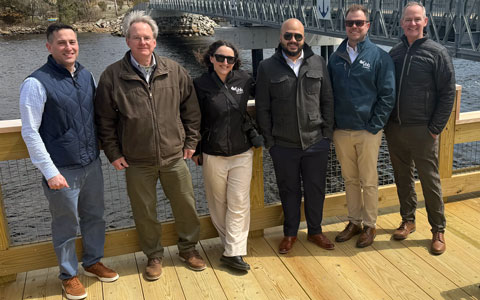
VHB recently joined state and local leaders to celebrate the ribbon-cutting and reopening of the East Bay Bike Path bridges over the Barrington and Palmer Rivers, marking the completion of a major infrastructure investment that restores a continuous, off-road connection between Providence and Bristol.
VHB served as lead designer for this design-build project, partnering with Aetna Bridge Company to replace two aging structures with modern bridges that prioritize long-term performance, safety, and community access.
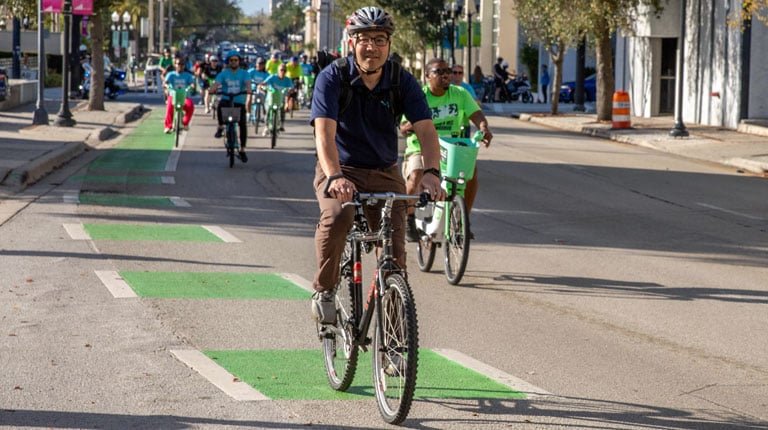
The East Bay Bike Path is one of Rhode Island’s most heavily used recreational and transportation corridors. The reopening of the Barrington and Warren bridges restores uninterrupted access along the 14.5-mile bikeway, supporting cyclists, pedestrians, commuters, and visitors who rely on the path for everyday travel and recreation.
Throughout construction, temporary off-road detours and boardwalks were provided to maintain access for path users, reflecting a strong commitment to minimizing disruption and keeping communities connected. Community input also helped shape the final design, resulting in new fishing access features incorporated into both bridges and expanding recreational opportunities along the rivers.
“VHB is proud to have been part of this important infrastructure project that restores a cherished community connection and improves how people experience the East Bay Bike Path,” said Andrew Prezioso, VHB Project Manager.
The new bridges replace structures that dated back to the late 1800s and were no longer safe or serviceable. Each bridge is approximately 300 feet long and 14 feet wide, designed to meet current standards for shared-use paths while enhancing comfort, visibility, and accessibility. The project utilized prefabricated modular truss bridge systems, enabling faster installation, reduced environmental impacts, and a longer design life. The lighter-weight structures require smaller foundations and fewer in-water elements, with only a single central pier per bridge—significantly reducing impacts to the rivers and surrounding habitats. A low-profile design also minimized the need for utility relocations, helping streamline construction and reduce overall project complexity.
Learn more about how VHB delivers design-build projects to save clients time and money.