

Forward-thinking insights focused on a more sustainable tomorrow.
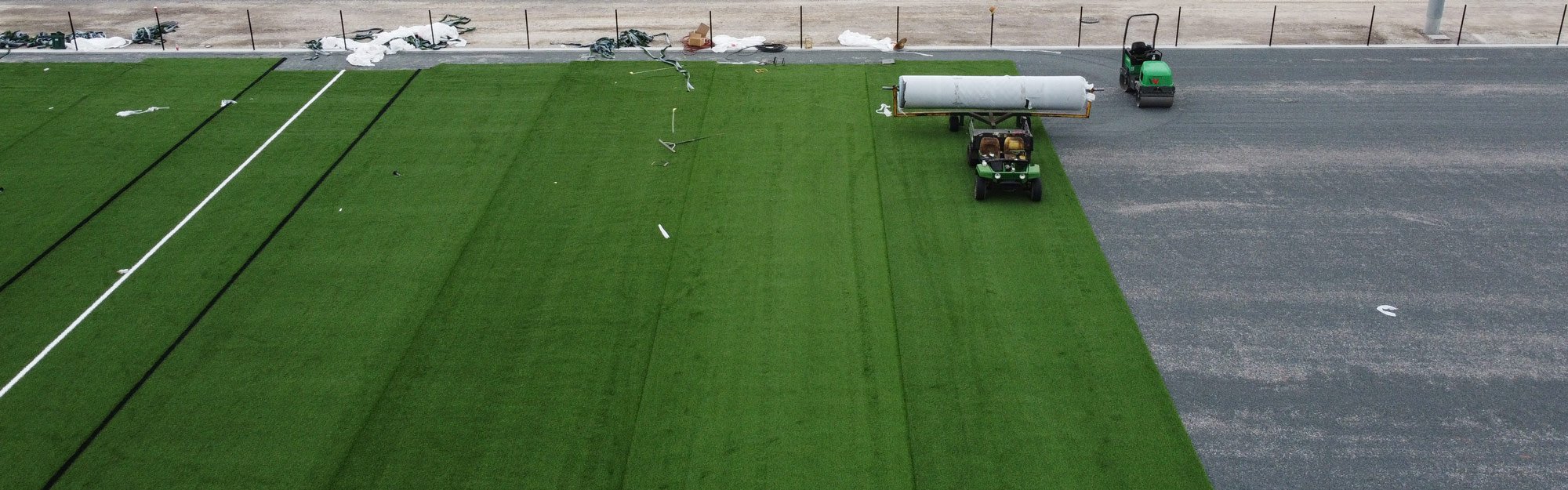

Full Circle on the Fields: Engineering for Sports Tourism and Resilient Stormwater Design
January 2026
Matt is a civil engineer with deep knowledge in land development, site design, and infrastructure. Over the course of his career, he’s developed a strong understanding of the unique stormwater standards and coastal challenges that come with working in Virginia Beach. His experience navigating these regulations, paired with his technical depth, has made him a go-to resource.
Recently, Matt celebrated the completion of one of the projects he managed—the Hampton Roads Soccer Complex Field Conversions. This wasn’t just any project. It is a place Matt has known for years, and now, he’s helped modernize it to last for generations to come. This is Matt’s story.
Continuing to Advance Diversity and Equity

A look back at where it all began—my team (left, 2001) and Colby Schneider’s team (right, 2009) taking the field at the Hampton Roads Soccer Complex.
I grew up playing soccer in Virginia Beach, and these fields have been a part of my life for as long as I can remember. I still think about the 2001 championship game we won here—it’s one of those memories that sticks with you. Working closely on the Soccer Complex Field Conversions with Colby Schneider made it even more special. Colby also grew up playing soccer on these fields a few years behind me, and they were a big part of his childhood too. Coming back now as engineers to help shape the fields where we both spent time during our youth, feels like we are giving back to the place that helped shape us.
Modernizing for Sports Tourism
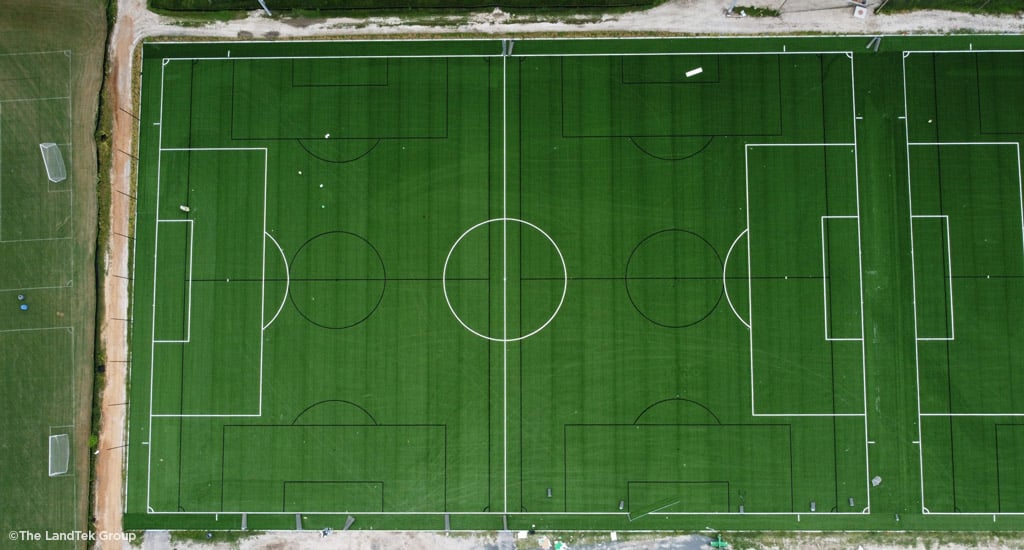
This project wasn’t just about new turf—it was about keeping Virginia Beach competitive as a sports tourism destination. The 19.93-acre site hosts tournaments that bring in visitors from across the region, generating millions in economic impact each year. By converting six natural turf fields to synthetic turf and upgrading a gravel path to asphalt, we’re making the complex more functional, accessible, resilient, and attractive for future events. Construction was led by The LandTek Group, whose knowledge in athletic field installations helped bring the new synthetic turf fields to life.
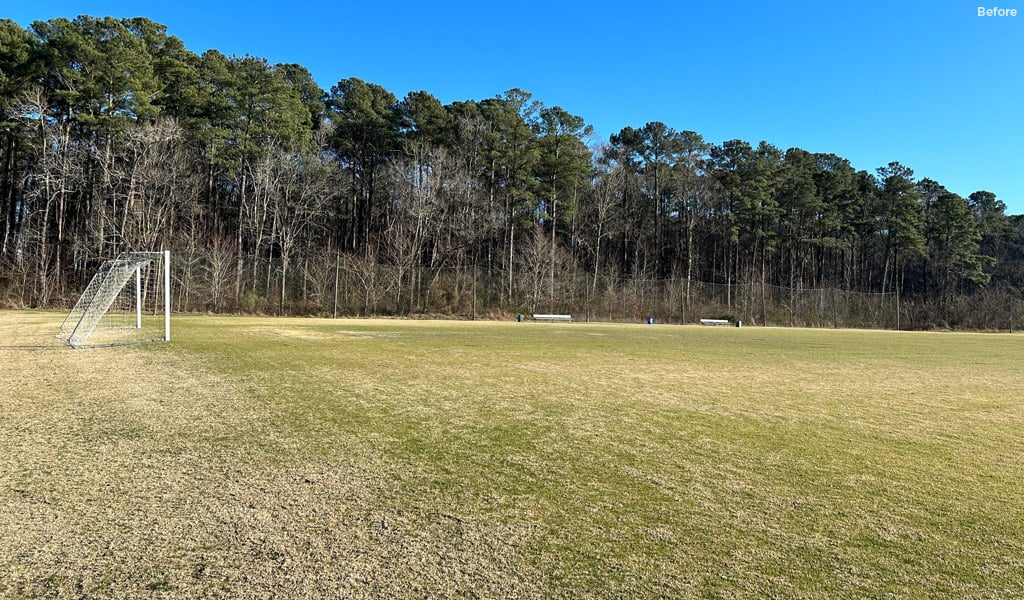

Sports tourism contributes millions in tourism dollars to the city each year—upgraded fields help attract even more tournaments.
Stormwater Challenges and Creative Solutions
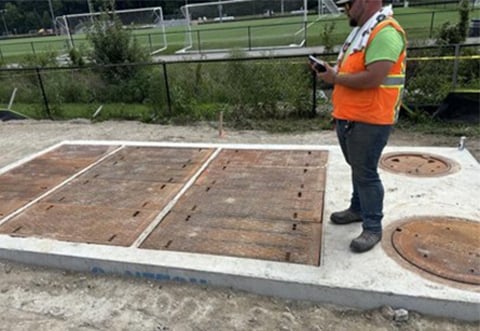
The Contech Jellyfish filter uses membrane cartridges to remove sediment, nutrients, and metals before water leaves the site.
When I was running on these fields as a kid, I never thought I’d know so much about what’s happening beneath the surface. Back then, the only thing I worried about was keeping the ball at my feet. Now, I’ve learned that every drop of rain must be managed carefully. Synthetic turf is fully impervious, so every raindrop becomes runoff that can flood the site or impact water quality downstream. With limited space for stormwater solutions and strict water quality rules for the nearby waterbody, we had to get creative. The fields are designed to meet Level 1 permeable pavement specifications, with stone beneath the turf acting like a giant sponge to hold and slow runoff. Any remaining water is treated by an underground Contech Jellyfish filter before leaving the site.
Navigating the Floodplain
Working in the floodplain added another layer of complexity—especially in a coastal community like Virginia Beach, where increasing coastal impacts and rising water levels make flooding a constant concern. We had to follow strict rules that didn’t allow any reduction in flood storage, and any fill we added had to remain in contiguous areas and make up less than 5 percent of the floodplain. It was a careful balancing act: designing the fields to function properly, managing stormwater, and meeting floodplain requirements, all while keeping the site resilient to future flood events.
Because we’ve done a lot of work in Virginia Beach, we understand the unique challenges of a dense urban footprint, limited Best Management Practice (BMP) space, downstream Total Maximum Daily Load (TMDL) requirements, and extensive floodplain coverage. For this project, our approach was simple in principle but required thoughtful execution—capture and treat every drop of runoff before it leaves the site. Through careful planning, modeling, and coordination, we created a stormwater system that quietly does the heavy lifting beneath the surface while the fields above remain ready for play.
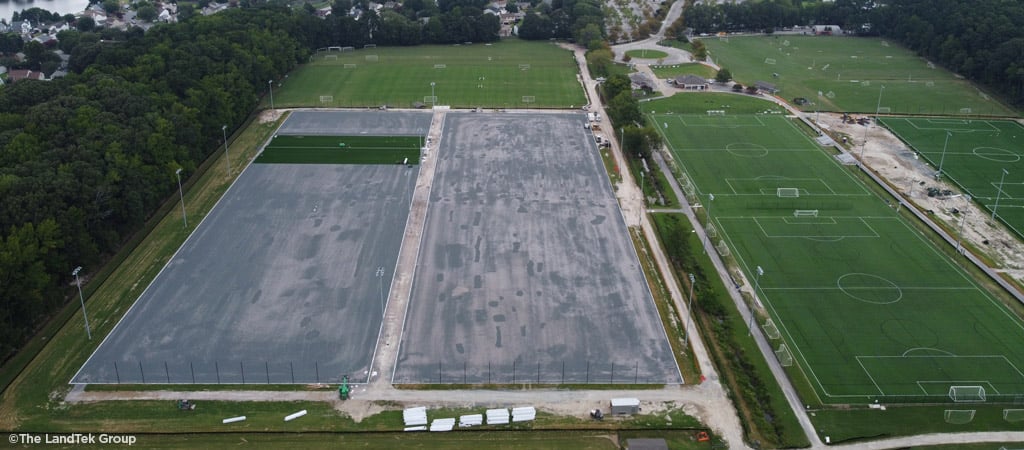
With construction wrapping up in October, I’m proud of what our team has accomplished. These upgraded fields will host countless games, tournaments, and memories for years to come. It’s rare to work on a project that connects so personally, and even rarer to see it come full circle.
Learn more about Hospitality and Sports at VHB or reach out to me for more information by sending me an email.