

Forward-thinking insights focused on a more sustainable tomorrow.
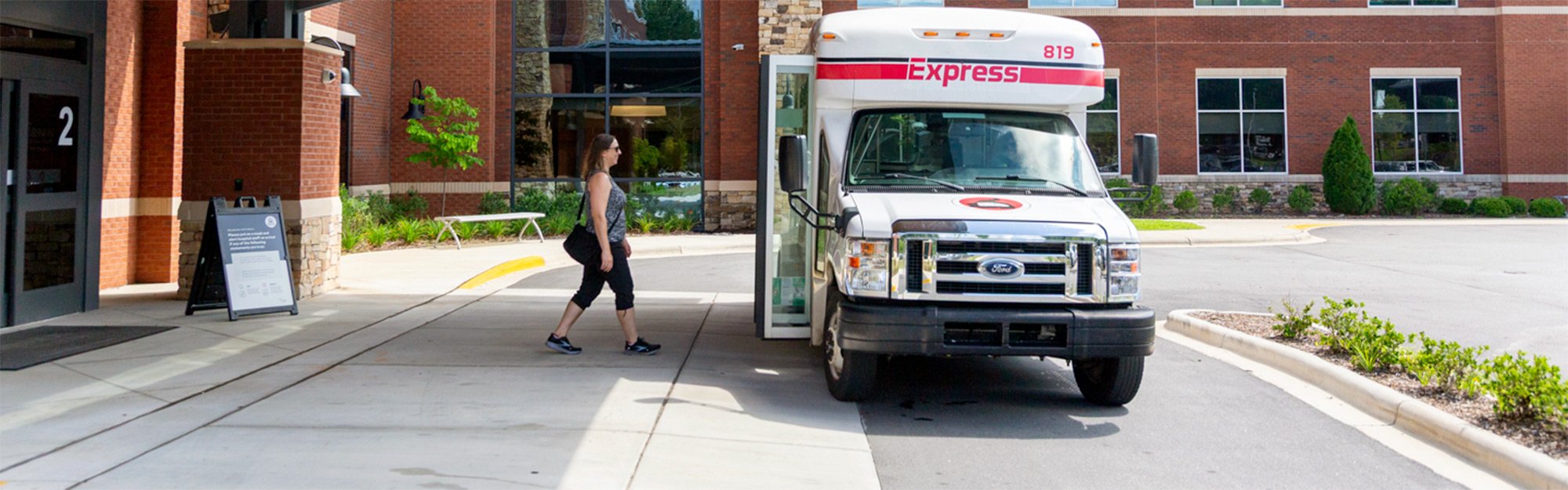

Mobility for Everyone, Everywhere: Bringing Transit to Rural NC
February 2026
Serena Singh is the kind of planner who doesn’t just work on projects—she lives them. She combines technical knowledge with genuine care, always considering how transit impacts the people who rely on it. Since joining VHB, Serena has served as co-project manager, helping lead the Mobility for Everyone, Everywhere in North Carolina (MEE NC) grant project with the North Carolina Department of Transportation (NCDOT) Integrated Mobility Division, a program that provides on‑demand microtransit to rural communities to expand mobility and access. Serena helps manage all aspects of the project—from strategic planning to staffing, ribbon‑cutting events, and tracking project progress. More than the behind‑the‑scenes work, Serena’s focus is on understanding rural challenges and developing solutions that not only connect residents to microtransit but also enhance their independence, daily lives, and access to opportunity. This is Serena’s story.
When I first started working on the MEE NC project, I was struck by how transformative microtransit can be for rural community members who often have limited transportation options. By using smaller vehicles to provide on-demand, door-to-door trips within a defined service area, microtransit offers flexibility that traditional transit can’t always provide. Over the past year, I’ve had the chance to visit these towns, ride along with operators, and meet the people who rely on the service. Their stories bring the impact of this work to life.
Take John, an elderly resident of Rockingham, North Carolina. His eyesight and mobility challenges make driving nearly impossible, but he uses MEE NC to visit his wife in an assisted living center—trips he couldn’t safely make before discovering the program. With 10 of the 11 communities already launched and early momentum building, we’re collecting stories like John’s and data to help NCDOT sustain this vital service long-term—because mobility isn’t a luxury, it’s a right.
What’s Behind Stories like John’s?
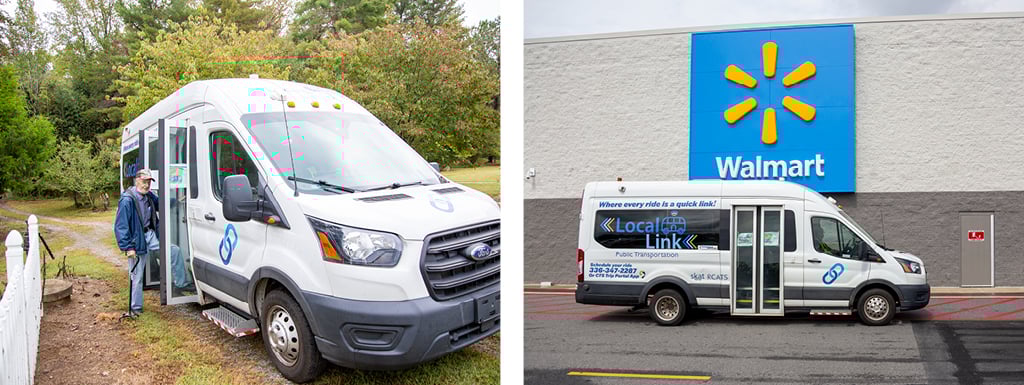
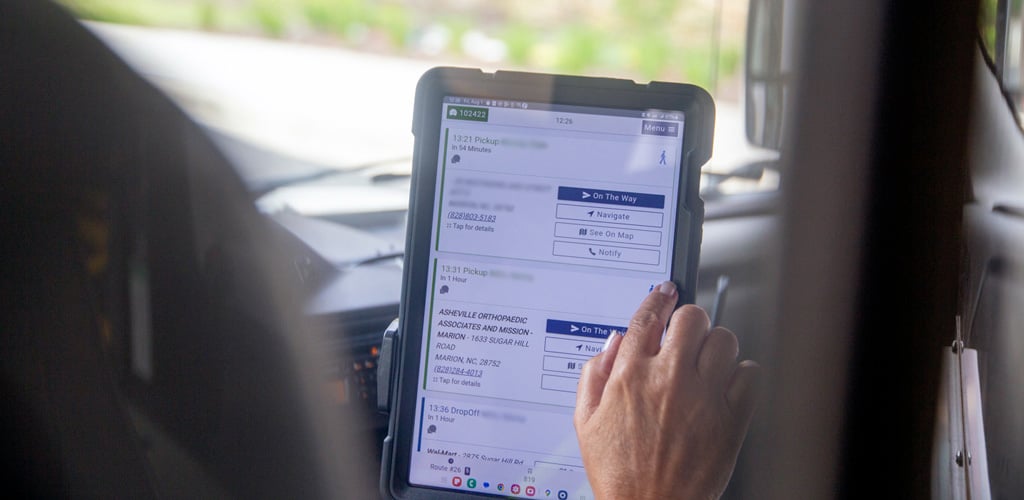
MEE NC is expanding on-demand microtransit to rural and low-income communities, providing flexible transportation where traditional buses or rail services can’t reach. Riders can book trips through an app or by phone, and fares range from $0 to $6, depending on the transit system. From 2024 to 2026, the service pilots a flexible, door-to-door model while NCDOT explores ways to continue it beyond the three-year grant.
Who’s making this possible?
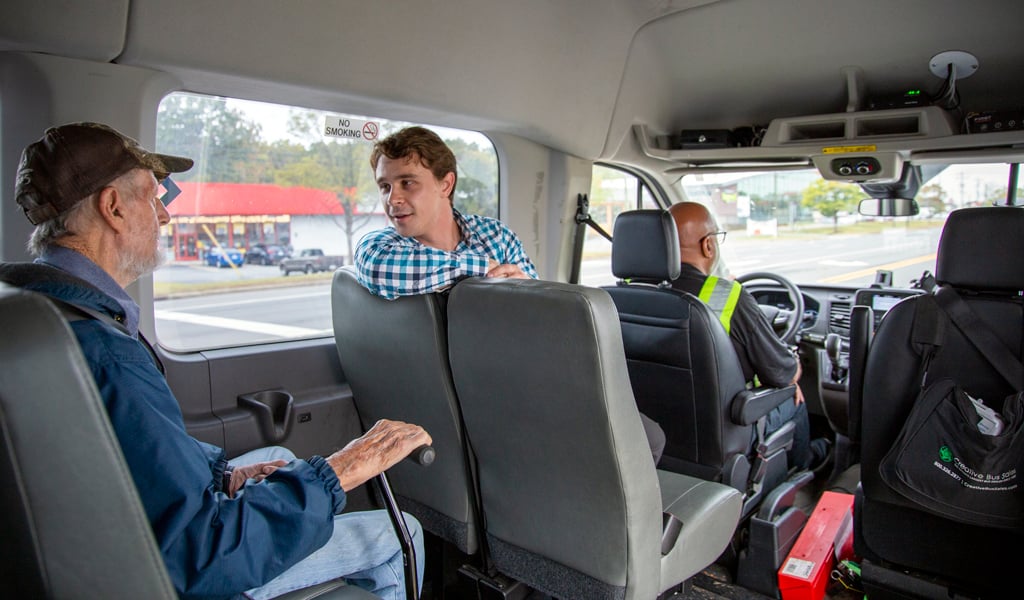
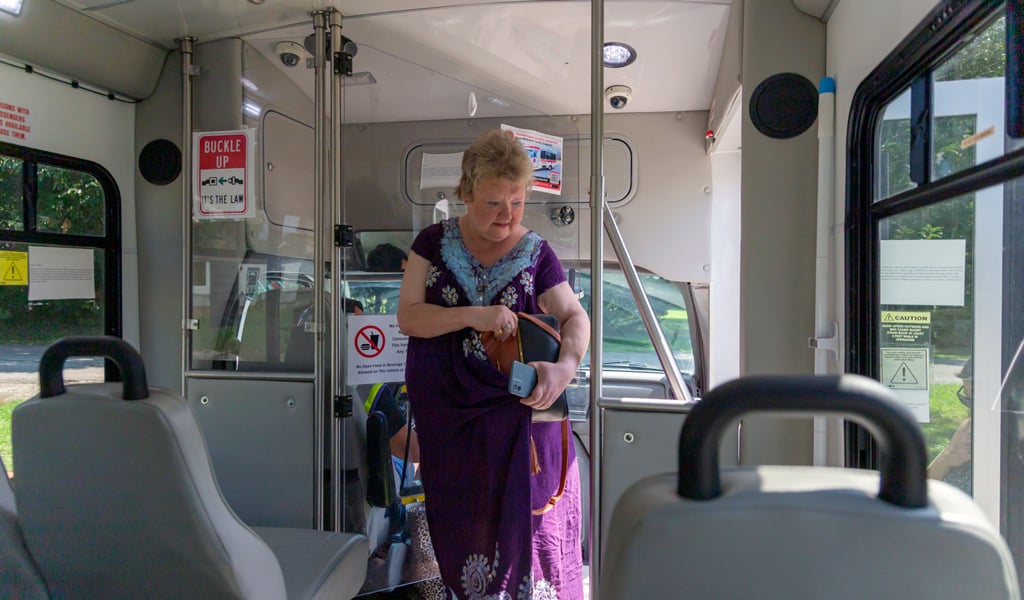
VHB Transportation Planner Joe Wiswell rides along and talks with John, experiencing the service from a rider’s perspective. Listening directly to riders and seeing the system in action is a critical part of designing transit that truly works for communities.
I partner with Darcy Downs, NCDOT IMD’s MEE NC project manager; Kai Monast from the Institute for Transportation Research and Education (ITRE) Institute; and the 11 pilot program communities day to day. That regular coordination across teams is what keeps the service moving forward and responsive to the needs of each community. There is also strong support from NCDOT IMD leadership, Julie White and Brennon Fuqua, who have championed this initiative from the beginning. Their commitment to innovation and mobility equity has been instrumental in driving the project forward.
At VHB, our team has been central to turning this vision into an operational reality. I work closely with transportation planners James Hamilton and Joe Wiswell to help shape early planning with NCDOT, guiding the framework that now connects these communities. Our team also supports service planning, performance monitoring, regulatory compliance, marketing, outreach, and on-the-ground coordination at launches and events, including ribbon-cutting ceremonies. These ceremonies are often where we really get to see the excitement and energy of community members as microtransit arrives in their towns. Talking with riders and watching them board the vehicles for the first time shows the impact of this service in a way that no report or plan could capture.
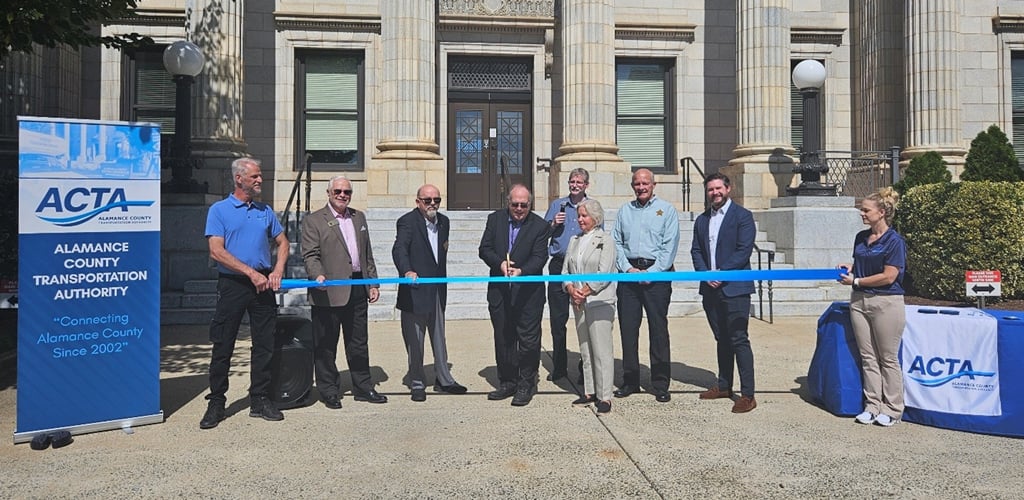
Why it matters for rural communities
Rural mobility challenges are complex. Distances between home and shopping/entertainment/medical offices are long, roads can be narrow or steep, and many residents lack access to affordable public transit options. MEE NC fills this gap by creating demand-based service zones that connect seniors, students, people with disabilities, parents, and workers to the places they need to go. Mobility isn’t just convenience—it’s independence, connection, and opportunity.
More Stories from the Road
We’re hearing more and more stories that highlight the real value of this service and the role freedom of movement plays in independence. A Sanford driver joined MEE NC after his daughter suffered a stroke and could no longer drive. He was motivated by a desire to help others regain their independence.
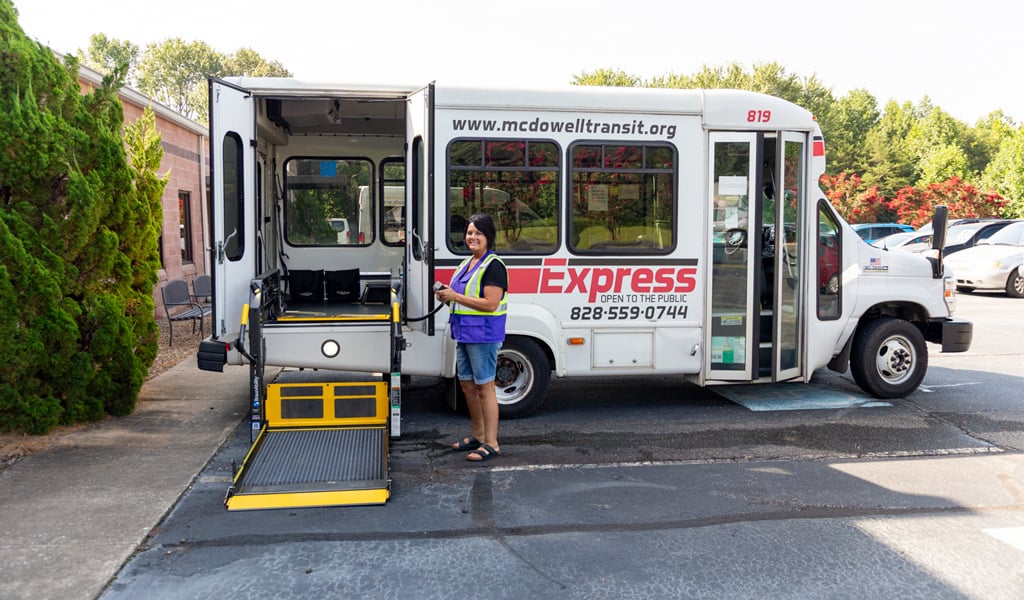
In McDowell County, regular riders use the service for everyday moments—getting a haircut or visiting friends. As one driver put it, “It’s my chance to get out and talk to people.”
Learn more about how VHB is Planning for the Future of North Carolina or reach out to me for more information by sending me an email or connecting on LinkedIn.