

Forward-thinking insights focused on a more sustainable tomorrow.

Rebuilding North Carolina After Hurricane Helene
June 2026
Kevin Fischer’s connection to North Carolina runs deep. He moved to the Outer Banks with his family at age 11, earned both his bachelor’s and master’s degrees from North Carolina State University, and spent 20 years with the North Carolina Department of Transportation (NCDOT) before joining VHB in 2022. These experiences have instilled a strong sense of purpose in his work.
Throughout his career, Kevin has led and supported emergency response efforts following major storm events, assessing damage and advancing critical repairs to restore mobility for impacted communities. In the aftermath of Hurricane Helene, Kevin and his team mobilized quickly, partnering with NCDOT and local agencies to inspect damaged bridges, develop repair and replacement strategies, and support funding through the Federal Emergency Management Agency (FEMA) and Federal Highway Administration (FHWA) processes. His work is focused on delivering practical, resilient solutions that balance engineering performance with cost efficiency.
Together with his team, Kevin is helping communities across Western North Carolina rebuild stronger. This is Kevin’s story.
When Hurricane Helene hit Western North Carolina, the destruction was unlike anything I had seen before. I’ve spent much of my career involved in emergency bridge inspections and recovery efforts after multiple hurricanes. Helene was different. The scale of damage in the mountains, far from where storms typically hit hardest along the coast, was unprecedented.
Just days after the storm, I received a call from NCDOT. Numerous bridges had been severely damaged or completely destroyed, and there was an urgent need to assess conditions, update repair plans, and move construction forward as quickly as possible. Our team got to work immediately, revising existing plans, expediting reviews, and helping get projects out the door so construction could begin.
As the recovery effort expanded, so did VHB’s role. In the months following Helene, our team supported inspections and design work for dozens of bridges across the region. During the week of Thanksgiving 2024, we inspected more than 20 bridge sites in just a few days. These days were spent navigating steep terrain, debris-filled roadways, and communities still reeling from the storm. Some bridges were repairable; others required full replacement using emergency delivery methods to restore access as soon as possible. What stays with me most are the communities behind those bridges.
A Bridge Can Be Someone’s Lifeline
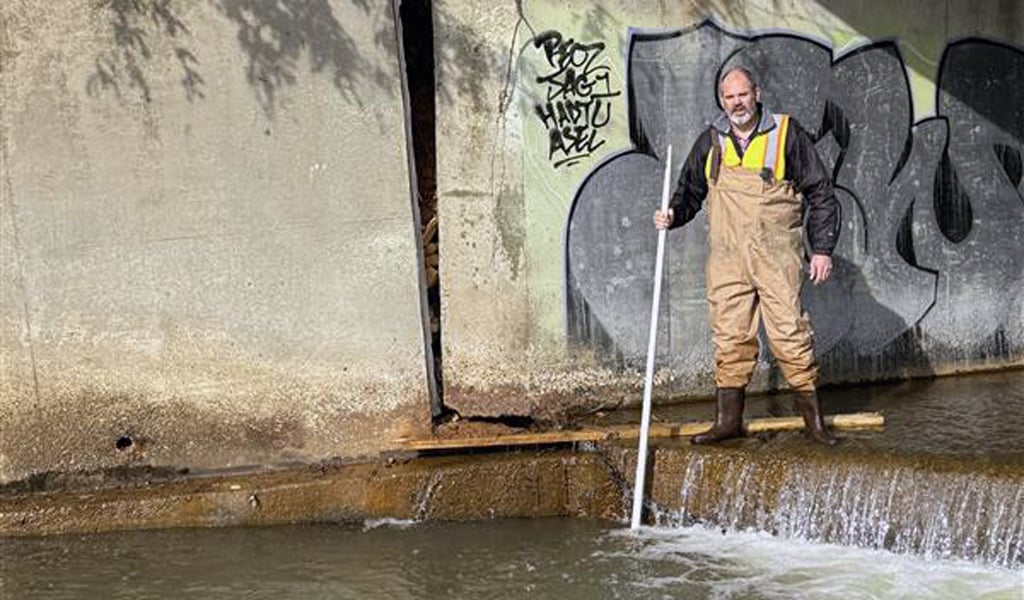
Kevin Fischer inspects infrastructure damage caused by Hurricane Helene.
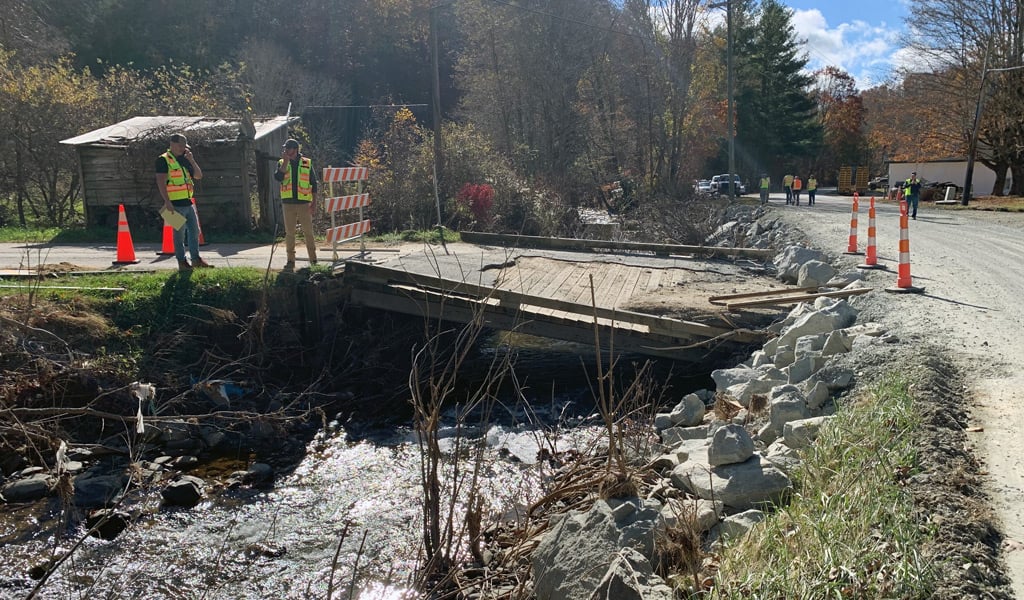
At a site near Swannanoa, our team traveled through a town that had been hit incredibly hard. Damaged homes lined the road, a church with its front facade was torn away, and debris was everywhere you looked. The bridge we were inspecting had been repaired and reopened, the only access point for a community of around 100 homes.
While we were there, a resident stopped his car and spoke with us. He told us how, after the storm, his neighborhood was completely cut off. It took days just to clear trees from driveways. Food and water had to be carried in by hand—Boy Scouts reportedly hiked supplies up to residents who had no other way in or out. Hearing moments like that put our work into perspective, showing us how bridges serve as someone’s lifeline.
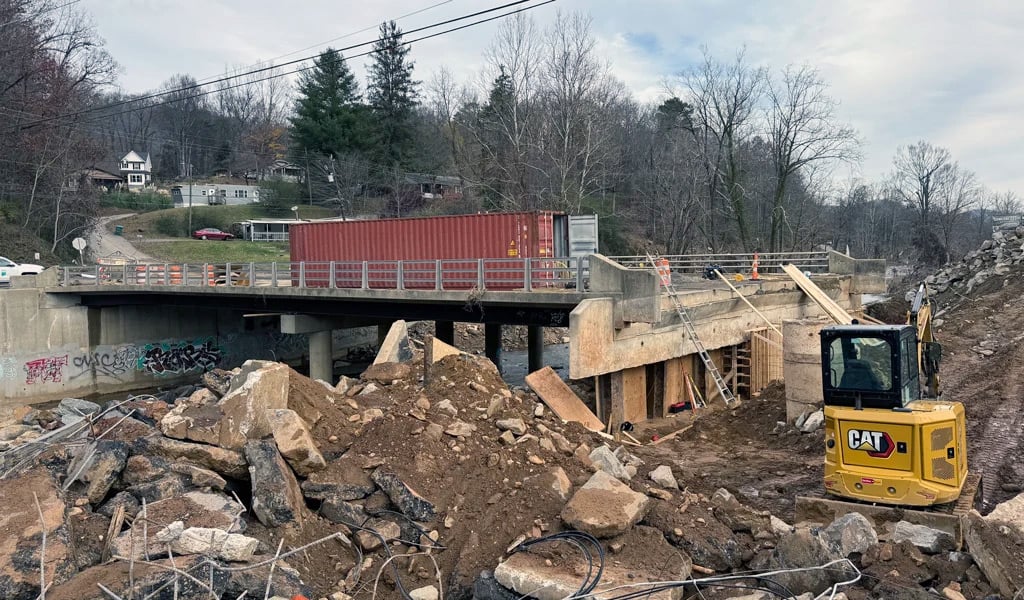
Over time, our team has returned to many of these sites. In some areas, progress is visible and repairs are complete, debris is cleared, and communities are moving forward. In others, the damage remains and serves as a daily reminder of Hurricane Helene’s impact. In all of these places, you witness how recovery is a human driven process. One of the most meaningful moments came when a repaired bridge, US 70 in Swannanoa, reopened and the community asked NCDOT to host a ribbon cutting. The reopening represented movement, reconnection, and a tangible sign that recovery was underway.
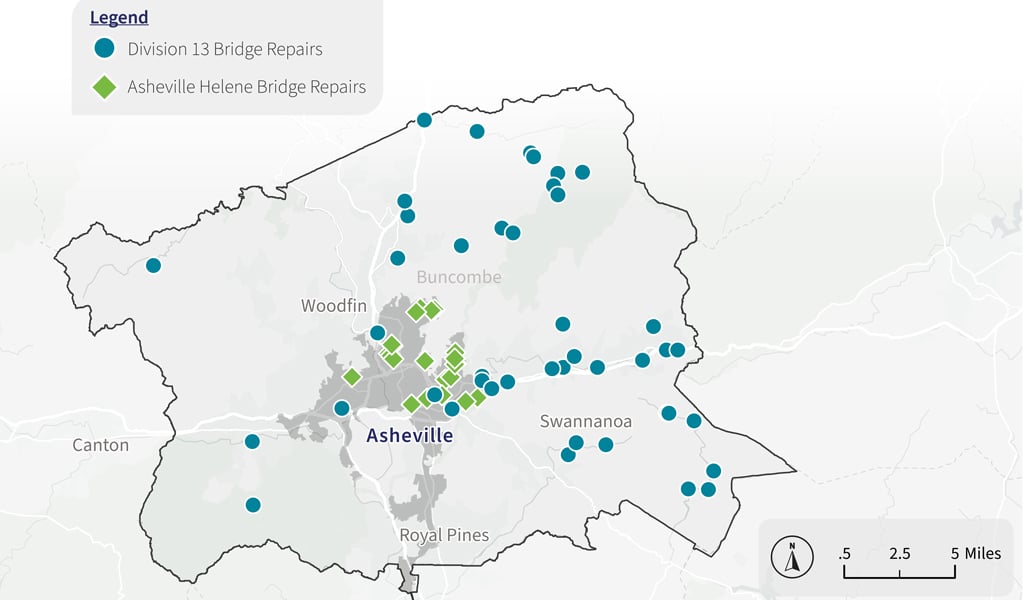
Our North Carolina team continues to support NCDOT through our Structures On-Call Contract and we’ve recently expanded our efforts with the City of Asheville through an Engineering and Design Services Contract for Citywide Roadway Structure Repairs and Replacements. These trusted partnerships enable us to keep advancing critical work that restores access, strengthens infrastructure, and supports mobility across Western North Carolina.
Building Better Through Resilient Design
From an engineering standpoint, Helene has reinforced the importance of resilient design. Even when replacing a bridge “like for like,” newer materials and construction methods inherently improve durability. In many cases, though, owners are going a step further—widening openings, adding scour protection, anchoring structures more securely—so future storms don’t result in the same level of damage.
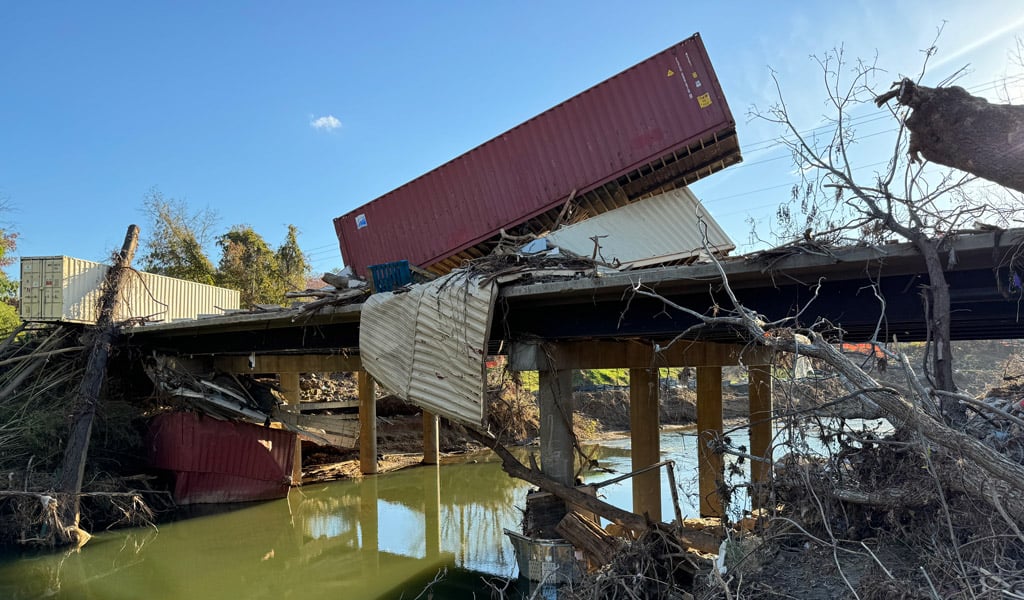
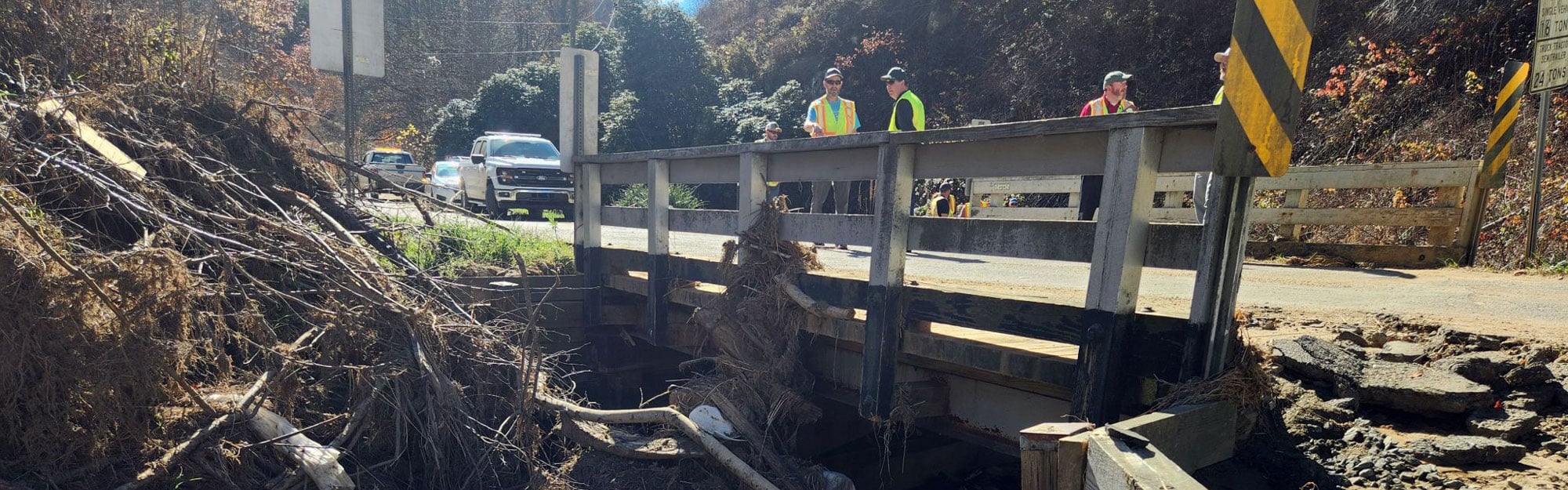
During a November 2024 inspection, a debris-covered bridge in East Asheville revealed extensive scour—leading our team to develop plans to deepen caps for future storm resilience.
Behind the scenes, another major component of this work involves documentation and coordination with FEMA and FHWA on rehabilitation versus replacement decisions, directly affecting reimbursement eligibility. VHB is helping our clients navigate those requirements, which is a critical step to rebuild responsibly and to avoid unnecessary financial burden for our clients.
Before Hurricane Helene, VHB was also working with NCDOT on two bridge replacement projects that ended up being washed out during the storm. We initially thought we would have years to prepare plans and relocate utilities in preparation for these bridge replacements, but we developed plans, including rephasing all of the work, in a matter of months to get these bridges replaced as soon as possible. After the storm, we developed plans for two more destroyed bridges and the Progressive Design-Build (PDB) project along NC197 by expediting the design process to accelerate construction timelines.
North Carolina Strong
This work has largely been carried out by VHB’s North Carolina teams in Raleigh and Charlotte—team members who are passionate about helping their state recover. I’m incredibly proud of this group. NCDOT has estimated that roughly 95 percent of more than 7,000 damaged sites are now under contract for repair or replacement. Being a part of that effort has been both humbling and rewarding.
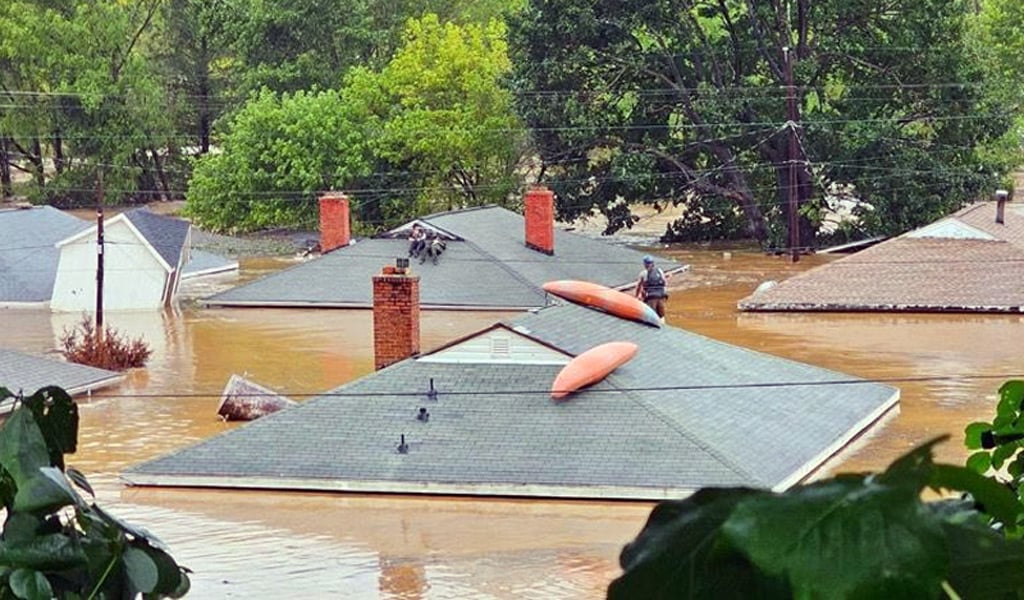
Personally, this experience has been a defining chapter in my career. Being able to combine my professional experience with a drive to help my neighbors, even something as simple as delivering supplies on the way to an inspection, has reinforced why I continue to focus on structures and bridge repairs.
One image from the field still stands out: a family photograph I found buried in debris beneath a bridge. I hope that one day I might be able to return it to its owner. It has been a quiet reminder that every pile of debris once belonged to someone, and that infrastructure recovery is ultimately about restoring lives.
Hurricane Helene tested our systems, our communities, and our resilience. It also showed what’s possible when agencies, engineers, and communities come together with a shared purpose to rebuild stronger, smarter, and with compassion.
Learn more about VHB’s Bridges and Structures practice or reach out to me for more information by sending me an email or connecting on LinkedIn.