

Forward-thinking insights focused on a more sustainable tomorrow.


From Insight to Action: Connecting ITS, Safety, and Operations
September 2026
A crash occurs on a busy commuter corridor during the morning rush. Within minutes, queues begin to build, emergency responders are dispatched, and traffic management center operators update traveler information on roadside infrastructure and adjust signal timing plans on adjacent arterials. Drivers receive alerts through connected systems. Behind the scenes, transportation professionals draw on years of safety analyses, operational planning, communications infrastructure, and technology investment to coordinate the response, restore mobility, and reduce the risk of secondary crashes.
Many transportation agencies understand that their greatest opportunities to improve system performance do not emerge from any single discipline. Instead, they emerge from the integration of Intelligent Transportation Systems (ITS), safety, operations, data analytics, and digital infrastructure. As agencies gain access to connected systems, real-time information, and more advanced decision-support tools, they are better positioned to improve safety, reliability, and resilience through coordinated action rather than isolated programs.
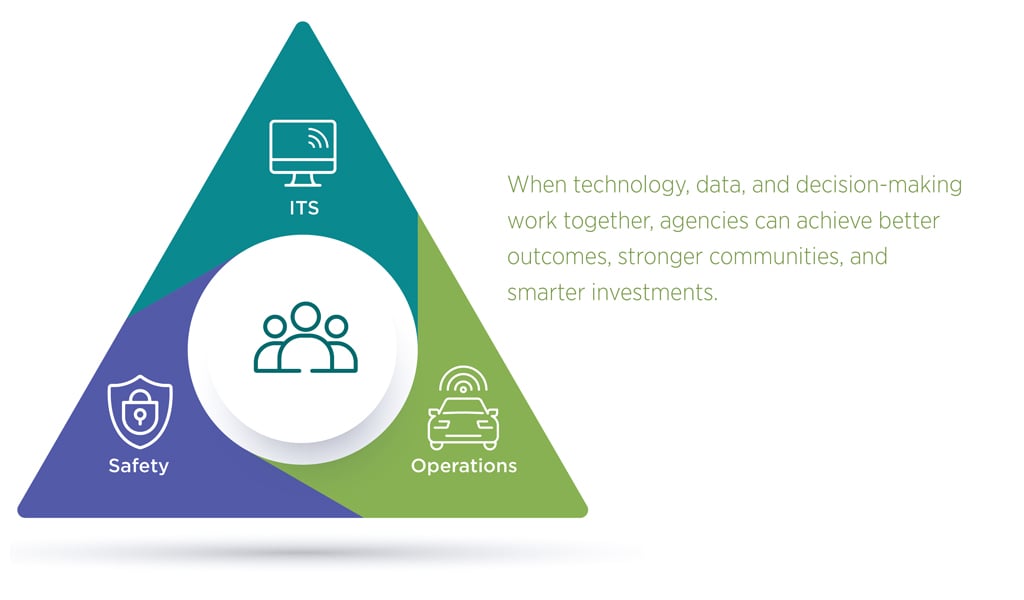
What once required separate analyses, independent programs, and different decision-making processes can now be evaluated through a more integrated operating lens. Agencies can use real-time information, probe data, advanced analytics, and connected systems to support safety objectives, improve operations, and manage networks more proactively. In that environment, ITS becomes more than an array of field devices; it becomes a link between safety, operations, and performance management that helps agencies turn information into action.
Building on Complementary Strengths
The benefit of connecting ITS, safety, and operations is not simply greater coordination among disciplines. It is the ability to understand transportation systems holistically and identify opportunities that may be missed when challenges are addressed in isolation.
Transportation decisions rarely impact a single outcome. Changes to signal timing can influence traffic flow, travel time reliability, and crash risk. Incident response strategies can improve mobility while reducing the potential for secondary crashes. Traveler information systems can help agencies manage congestion, support emergency response, and improve situational awareness for motorists simultaneously.
Advances in sensing, communications, probe data, connected infrastructure, and decision-support analytics are making these relationships easier to understand and translate into action. With access to real-time and historical information, agencies can evaluate how transportation systems perform as integrated networks rather than as collections of individual assets or programs. This broader perspective allows decision makers to identify solutions that support multiple objectives, prioritize investments more effectively, and improve outcomes using existing resources more strategically.
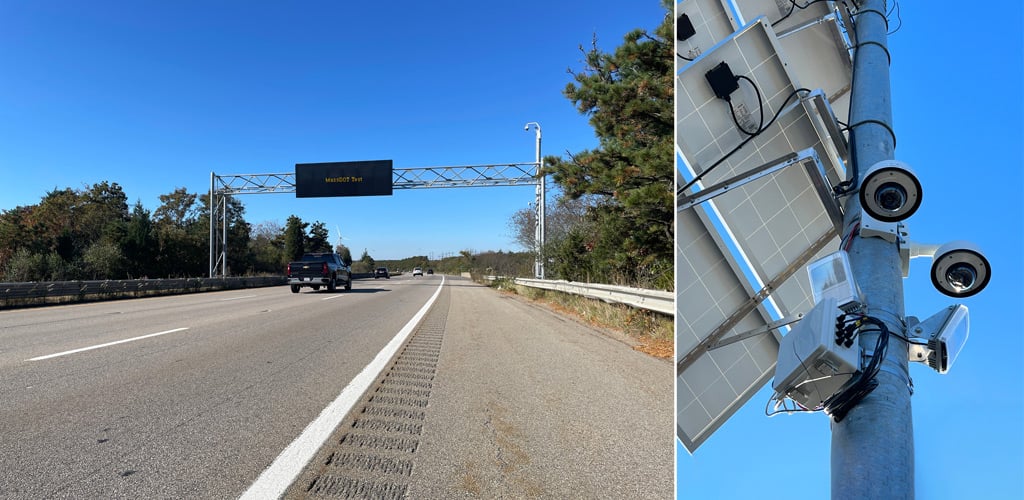
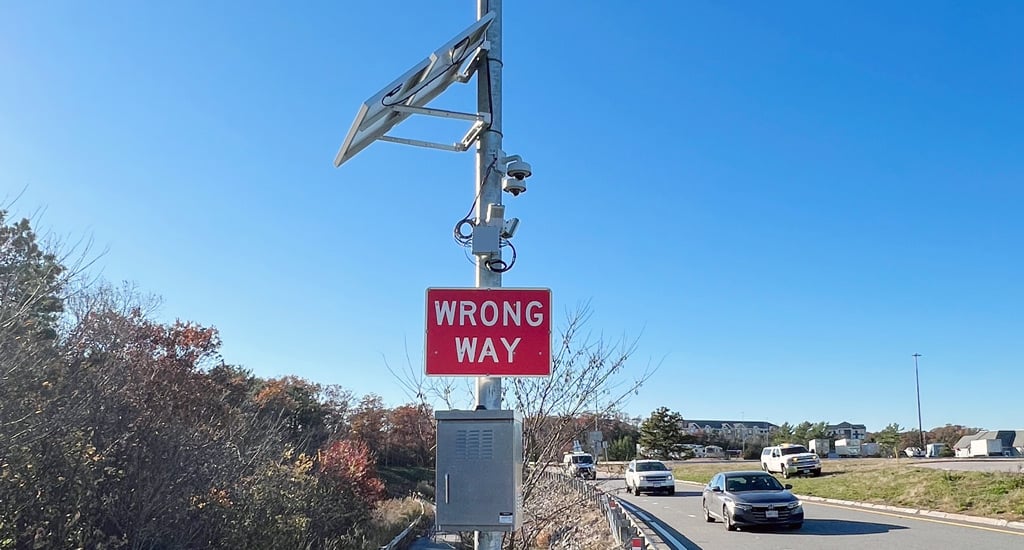
Wrong-Way Vehicle Detection Systems (WWVDS) deployed in states such as Florida, Rhode Island, Virginia, and Massachusetts illustrate that convergence clearly. Detection technologies, communications networks, edge analytics, and operator workflows work together to identify potential wrong-way entries, trigger alerts in real time to drivers, support verification by operations personnel, and accelerate notification to law enforcement and traffic management response personnel in attempts to avoid serious and often fatal crashes.
Technology as the Force Multiplier for Safety and Operations
If operations and safety create the framework for decision making, ITS increasingly serves as the catalyst that allows agencies to act on those decisions more effectively. In practice, that means connecting devices, communications, software platforms, operator workflows, and performance measures so technology supports day-to-day Transportation Systems Management and Operations (TSMO), rather than functioning as a series of standalone deployments.
At the 2026 ITS America Annual Meeting, transportation professionals learned about the successes and insights emerging from Macomb County’s Traffic Management Center (TMC) in Michigan. The TMC coordinates more than 700 traffic signals through a centralized system while supporting ongoing coordination with emergency responders. What stood out was not any single technology, but the way signal management, communications, situational awareness, and interagency coordination were integrated into a single operating environment. The example demonstrates that technology creates value when it supports operational decision making, not when it functions as a standalone deployment.
The significance of these approaches extends well beyond signal coordination. Similar principles can be seen in VHB’s work on Virginia’s I-66 Managed Lanes system, where communications infrastructure, ITS technologies, and operational strategies work together to support a more responsive transportation network. The value lies not in the technology itself, but in enabling agencies to monitor conditions, manage traffic proactively, communicate with travelers, and make informed decisions in real time. As transportation systems become more connected, projects such as I-66 demonstrate how digital infrastructure becomes operational infrastructure when it is aligned with corridor management, traveler information, and safety priorities to support safer, more reliable, and more adaptable travel.
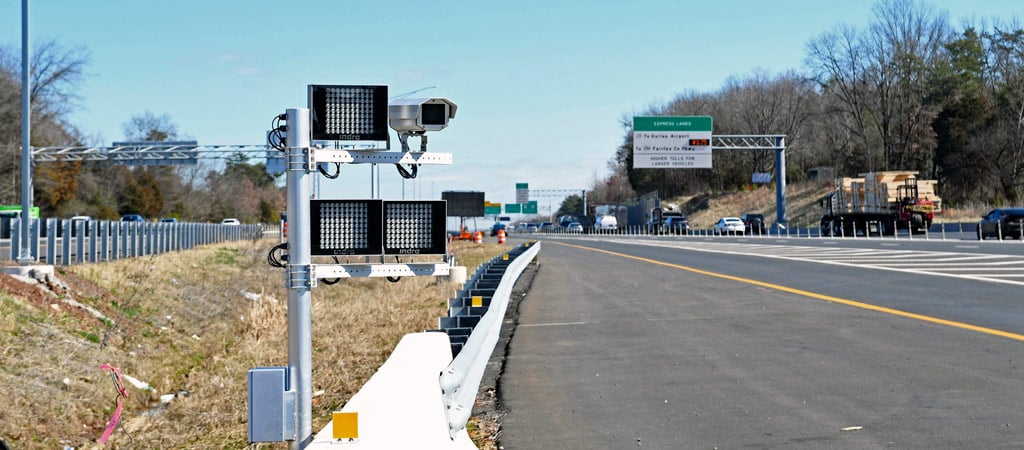
The lesson for agencies is not simply to deploy more devices; it is to invest in strategic planning for communications backbones, systems integration, operating concepts, and governance structures that allow technology to support faster and more informed decisions.
The Next Evolution of Transportation Management: Data, Connectivity, and Decision Intelligence
As agencies invest in connected infrastructure, cameras, detection systems, communications networks, and other data collection technologies, they are gaining unprecedented visibility into transportation system performance. The challenge is no longer collecting information. It is organizing data, digital infrastructure, and operator workflows so agencies can make faster, more informed decisions.
Artificial intelligence (AI) is emerging as a powerful tool to help agencies manage growing volumes of transportation data. Rather than relying solely on staff to monitor hundreds of camera feeds or manually review operational information, AI-enabled tools can identify unusual conditions, detect incidents, recognize recurring patterns, and surface critical information more quickly. This approach is already being incorporated into VHB’s work on Pittsburgh’s SmartPGH initiative, where communications networks, traffic management systems, roadway sensors, and AI-enabled analytics are being combined to support a safer, more responsive transportation network.
The opportunity extends beyond efficiency. By helping agencies identify emerging issues and focus resources where they are needed most, AI can strengthen both operational decision making and safety outcomes. Its value, however, depends on being incorporated into workflows, incident response procedures, and performance management practices rather than being treated as a standalone technology. Human oversight, data quality, cybersecurity, transparency, and implementation readiness must remain central to deployment decisions.
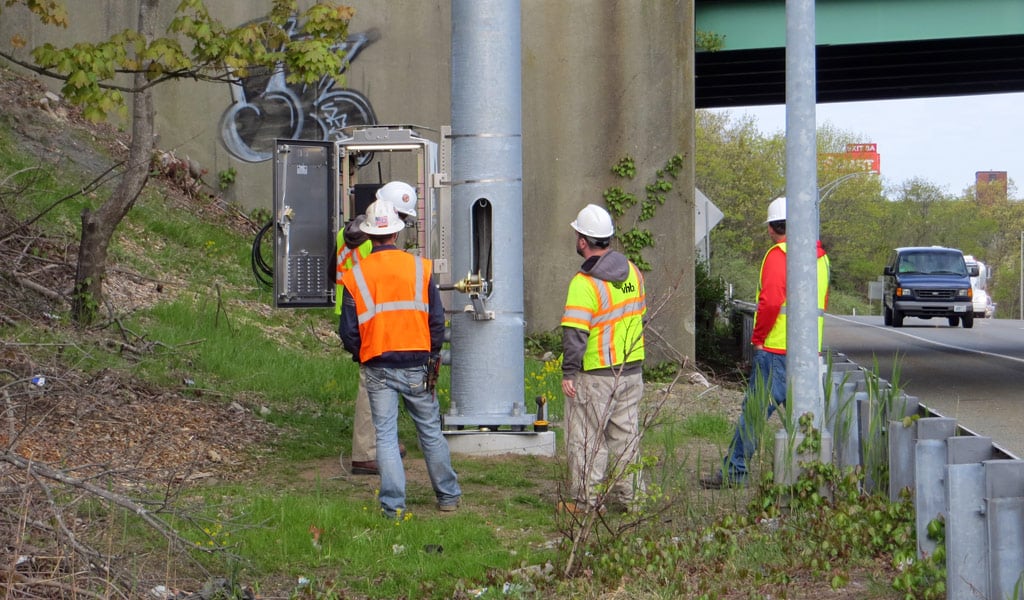
The same principle extends beyond AI. Smart City initiatives, advanced analytics, connected vehicle and Vehicle-to-Everything (V2X) deployments, digital twins, and other digital infrastructure investments deliver the greatest value when they support clearly defined safety and operational objectives. TSMO provides the framework that helps agencies align technology, business processes, performance measures, and response strategies to achieve those objectives. For FDOT District 5, VHB helped translate that framework into action through development of a TSM&O Implementation Plan and the SunStore data warehouse, which organizes billions of transportation data records into interactive tools that support real-time operations and long-term planning decisions. Similarly, advanced air mobility should be viewed through the lens of multimodal integration, including ground access, operations, siting, and system coordination, rather than as a standalone aviation trend.
For public agencies, the central question is not whether a technology is available, but whether it improves decision quality, supports day-to-day operations, and can be implemented in a way that is transparent, maintainable, equitable, and aligned with long-term operational needs.
How VHB Can Help
VHB works at the convergence of ITS, safety, operations, data analytics, and digital infrastructure, helping agencies move from isolated technology deployments to integrated operating strategies. Our experience includes corridor and network operations, managed lanes, traffic management systems, automated vehicle systems, connected infrastructure, safety analysis, and implementation planning. That combination allows us to help clients determine where emerging technologies can create measurable value, how they can be integrated into existing systems, and what organizational and performance frameworks are needed to support long-term success.
Our perspective is shaped by both implementation experience and national research. Through work with the Federal Highway Administration (FHWA), VHB has helped advance understanding of how operational strategies influence safety outcomes and how technology can strengthen decision making, system performance, and safety results. We also recognize that agencies are being asked to address a broader set of issues including AI, smart city coordination, data analytics, connected and automated mobility, digital infrastructure, and multimodal system integration within practical staffing, funding, and governance constraints.
Because every agency has unique goals, resources, and challenges, there is no one-size-fits-all solution. VHB helps agencies define what success looks like, identify high-value use cases, evaluate available opportunities, and develop practical strategies that align technology investments with operational, safety, and TSMO priorities. That includes helping clients connect planning, design, implementation, and operations so emerging technologies can
be deployed responsibly, integrated effectively, and scaled over time to deliver lasting operational value.
By combining research, multidisciplinary knowledge, and real-world experience, VHB helps agencies translate insight into action, creating transportation systems that are safer, more reliable, and better prepared for a connected, data-informed future.