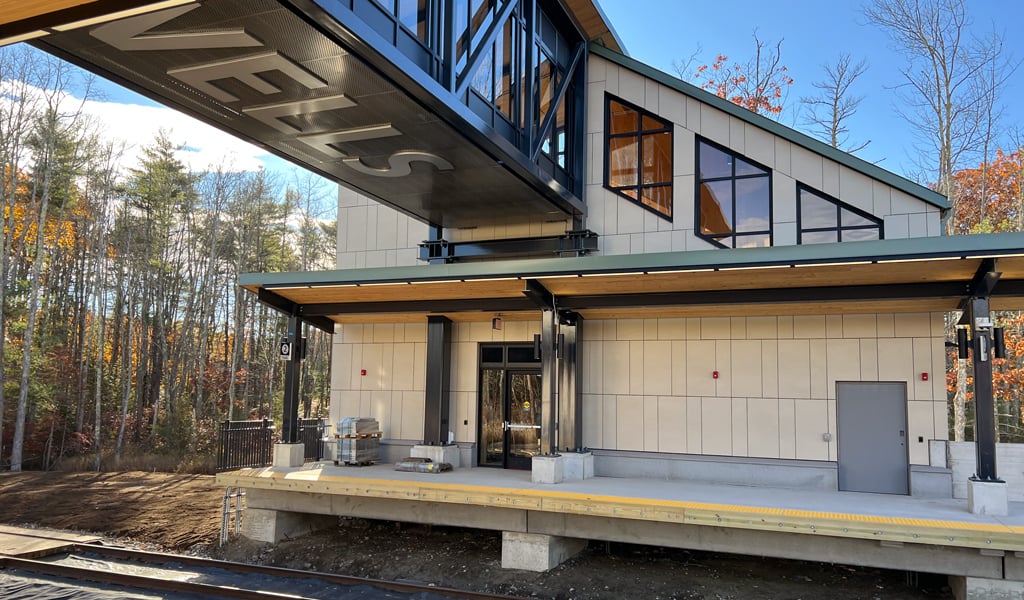
A ribbon-cutting ceremony last week at the Wells Regional Transportation Center (Wells Station) in Wells, Maine, marked the substantial completion of a key rail infrastructure improvement project with far-reaching impacts supported by VHB from the start.
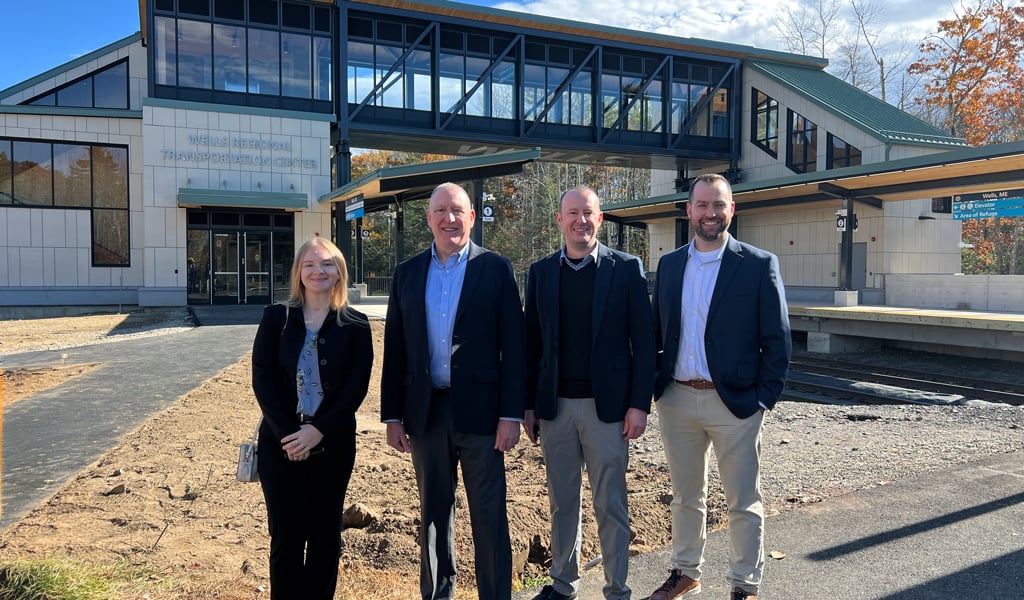
A pinch point in Wells along a heavily traveled rail corridor had posed operational challenges and caused delays for passengers using Northern New England Passenger Rail Authority’s (NNEPRA) rapidly growing Downeaster Amtrak rail service between Brunswick, Maine, and Boston, Massachusetts. They also caused steep service costs for freight trains. Guided by longtime consultant VHB’s preliminary assessment and recommendations, NNEPRA embarked on an ambitious Wells Area Improvement Project that would extend the existing Wells siding six miles and add a second platform at Wells Station.
To fund the majority of the $31.9 million project, VHB assisted NNEPRA in applying for and securing a Federal Rail Administration Consolidated Rail Infrastructure and Safety Improvements (CRISI) Grant. VHB’s multidisciplinary team then provided a full suite of integrated services—project management, track and station design engineering, environmental permitting, survey, and construction phase services—to help successfully bring the eight-year project to fruition. Keeping the corridor operational for Amtrak and freight service during construction required extensive coordination among VHB, the contractor, and all subconsultants.
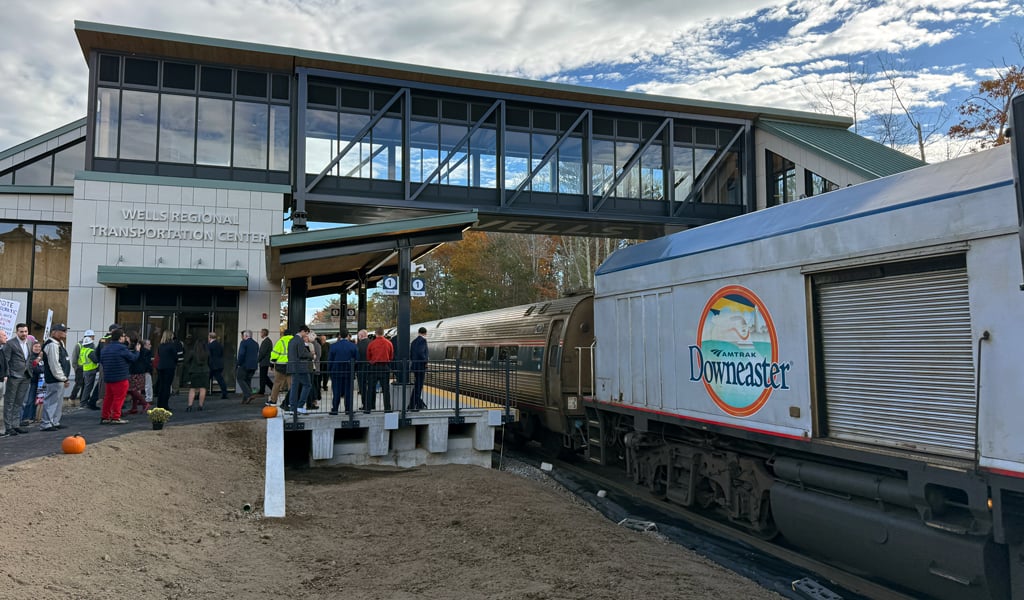
The project team innovated by primarily constructing the station improvements with cross-laminated timber (CLT), pioneering the use of this renewable building material in Maine where the timber industry is prominent. A pedestrian overpass with stair and elevator towers connects the station’s new boarding platform with a rebuilt high-level platform over the tracks.
Adding double-track capacity, the project allows Downeaster trains in opposing directions to board/discharge passengers simultaneously and allows freight trains to keep moving when a Downeaster train approaches. By reducing those conflicts, it is projected to save Downeaster passengers nearly 6,000 minutes of delay annually and reduce freight delays by 40 percent for a savings of over $7 million annually. Importantly, the project will also enable a new sixth weekday round-trip between Wells and Brunswick next year that NNEPRA Chair Jim Cohen said will “mark a new era for the Downeaster”—providing an estimated 95,526 additional annual trips by 2030.
“This important project demonstrates how a close working relationship and careful coordination between a transit agency and an engineer can benefit an entire rail system and strengthen regional connectivity. I’m proud to be part of the VHB team that has supported NNEPRA since its founding on key initiatives like this, including helping NNEPRA restore passenger rail service between Boston and Portland early in my career,” said Tim Bryant, PE, Managing Director, Maine.
Discover how VHB supports transit agencies in making transformative improvements that better connect communities, improve the rider experience, and enhance rail system performance.