
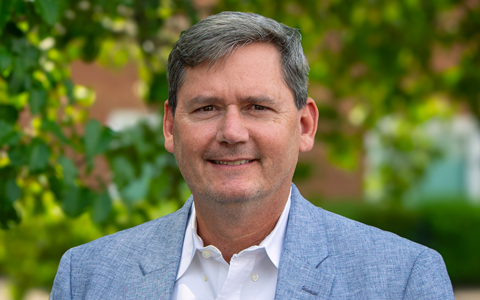
Dan Wintermeyer, PE, partners with clients to deliver industrial developments across the Atlanta region, from one million-square-foot distribution facilities to smaller-format logistics centers. With Atlanta continuing to serve as a major distribution hub for the Southeast, site selection, permitting, and speed to market remain critical to project success. We spoke with Dan about the forces shaping industrial growth in the region, the key factors behind site viability, and how VHB’s Industrial Team helps clients navigate local regulations to unlock opportunity.
VHB: What trends are shaping Atlanta’s industrial market, and how are they influencing investment?
Dan: Atlanta continues to stand out as a major distribution hub for the Southeast due to its growth and connectivity. Sitting at the intersection of major interstates including, I-20, I-75, and I-85—the city provides access to the entire Southeast within a one-day drive. Combined with proximity to the Port of Savannah and extensive rail access, this strategic position supports industrial demand and makes the region especially attractive for investors and logistics users.
Since 2020, the industrial market has taken a bit of time to normalize. Supply chain disruption led to the construction of new facilities that came online in 2022, and the market needed time to absorb that inventory. Now we are seeing a new wave of capital and investments flowing into Atlanta, one of the Southeast’s most sought-after markets.
VHB continues to see strong demand for large-scale industrial products, particularly big-box high-cube distribution facilities that are 800,000 to 1.1 million square feet. We are also seeing demand increase for smaller scale logistics facilities closer to the city.
VHB: When exploring a new industrial opportunity, what do you evaluate first?
Dan: New industrial developments start with a feasibility analysis. We look at the environmental conditions, zoning, and entitlement considerations to determine if the site is viable and can support the type of industrial product a client wants to bring to the market. In Atlanta, many industrial developments are built on greenfield sites, so environmental due diligence focuses on stream impacts and meeting the Army Corps of Engineers requirements and Georgia Environmental Protection Department regulations, which detail local buffers, and zoning.
Our civil engineering team collaborates with VHB's environmental scientists early on to conduct wetland and stream surveys and develop preliminary recompense calculations, to make certain we account for removal permits, mitigation costs, and replanting requirements that can materially affect project economics. By engaging our environmental professionals early on, we can identify potential regulatory hurdles before they become project obstacles.
Geotechnical conditions are the next major checkpoint. In metro Atlanta, rock can drive up costs and if a site requires extensive excavation or grading, it can affect the site’s feasibility. Understanding these subsurface conditions early on can help with decision making.
Tree ordinances can also be a major factor. Our civil engineering team works with the landscape architecture department to verify tree protection regulations, develop arborist reports and compute anticipated recompense for specimen tree removal.
Once the analysis is complete, our team moves into concept planning and starts shaping the site around the intended product, whether it is a rear-load building, cross-dock facility, or larger multi-building development.
VHB: Where do industrial projects most often hit roadblocks, and how does VHB help clients navigate them?
Dan: The biggest roadblocks usually show up early. Environmental constraints, zoning, geotechnical issues, and local ordinances can all reshape a project before the design gets very far. In the metro Atlanta area, stream impacts and permitting requirements are common pressure points, especially on greenfield sites. Any work affecting jurisdictional streams or their buffers triggers federal and state permitting and typically requires purchasing stream mitigation credits, which can range from tens of thousands to more than a hundred thousand dollars per impact. VHB helps clients minimize these costs through early stream delineations, site layouts that avoid impacts where possible, and efficient permitting coordination.
A good example of this is the Naturally Fresh Boulevard property in College Park, where we assisted Lincoln Properties in developing a new logistics facility. The site’s central location near Atlanta’s Hartsfield-Jackson International Airport made it ideal for industrial use. However, the presence of a lake, stream, flood plain, and wetlands on the property created significant permitting challenges. VHB worked closely with the owner to obtain an Army Corps NWP 39 permit for site access. We also secured the necessary City stream buffer variances to enable development. Additionally, VHB performed a flood study with a no rise certification to support the project.
For larger industrial developments, transportation infrastructure is essential. Georgia requires facilities larger than 500,000 square feet to undergo a Development of Regional Impact review, which evaluates the surrounding transportation network and identifies off-site improvements the project may need to advance. VHB’s transportation team supports those Atlanta Regional Commission reviews and helps developers work with local jurisdictions to develop practical solutions.
The value VHB brings is getting involved early, identifying risks before they become schedule or budget problems, and helping clients move through permitting, planning, and construction with fewer surprises to reduce the overall risk.
VHB: Speed to market is critical in industrial development. How does VHB help accelerate project timelines?
Dan: Speed to market comes down to anticipating site development challenges as early as possible. Permitting often creates the biggest scheduling hurdle, so much of our work is focused on getting ahead of that process. We understand local jurisdictions, know how different agencies operate, and structure approvals in a way that gives clients added flexibility with development.
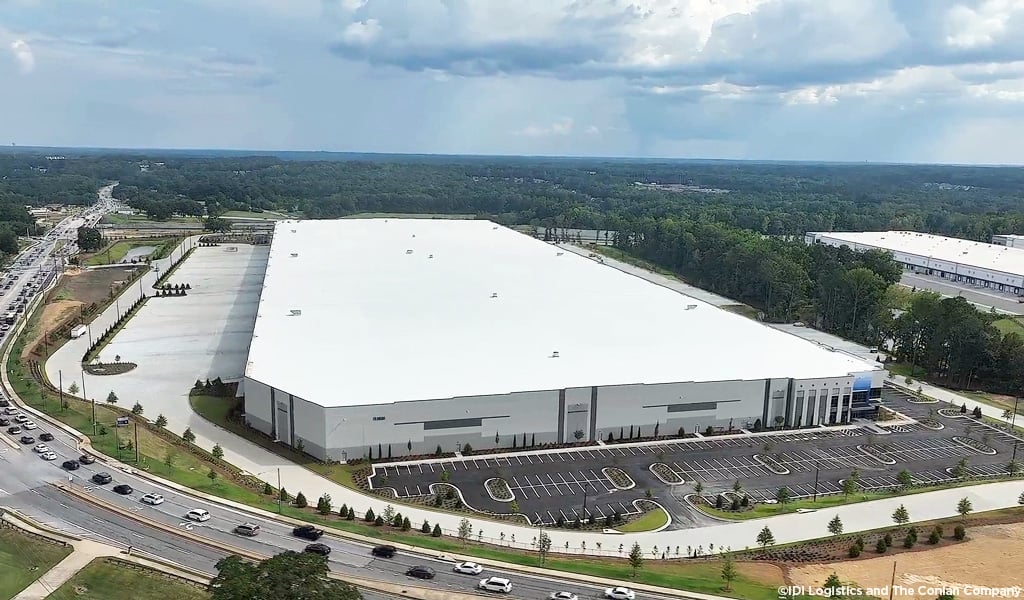
A great example is our work on the Swift Creek Logistics Center in Stonecrest, GA, a state-of-the-art industrial park that we are working on with IDI Logistics. The 188-acre site includes three building pads, one of which contains rock. Our team utilized LiDAR data and Civil 3D to generate earthwork computations which helped us develop a mass grading strategy for the entire site, including stormwater infrastructure. The strategy enabled the team to move soil from the other two pads to minimize costly rock excavation. We then secured separate permits for the individual building pads. By addressing sitewide grading and drainage issues up front, we gave the owner flexibility for the delivery of the three buildings on independent schedules as end users were identified.
VHB: Looking ahead, where do you see the most opportunity for industrial projects in Atlanta?
Dan: The next wave of large-scale high-cube industrial developments will move farther from downtown Atlanta into rural locations that are 50 to 60 miles outside the city, especially in jurisdictions with strong interstate access. Those outer-ring communities are likely to see continued growth as users look for large sites that can accommodate big-box developments.
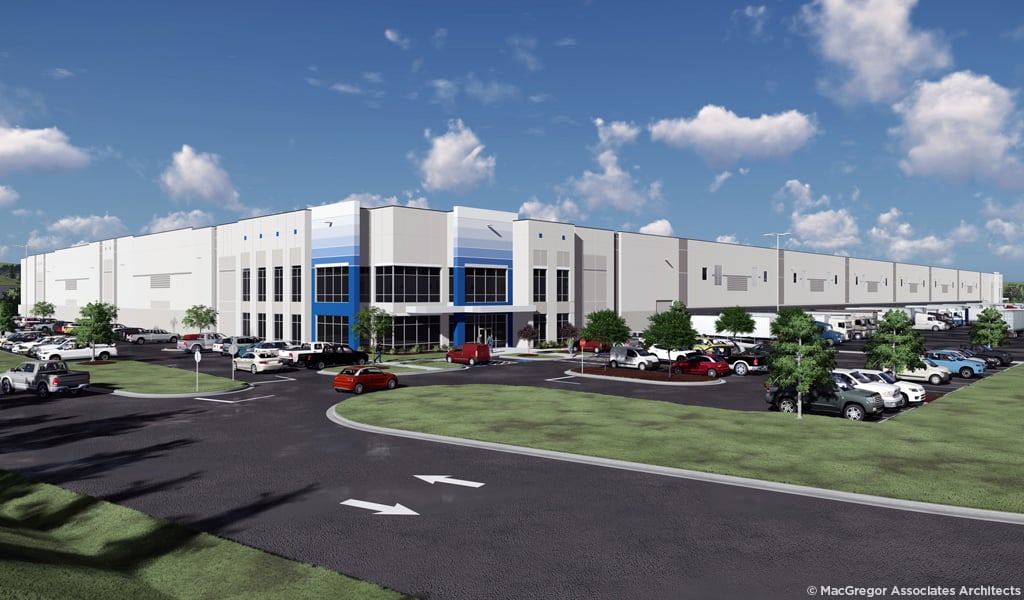
Closer to the urban core, I see opportunity in a different form: smaller industrial products. As prime metro sites become harder to find, there will be increased demand for smaller logistics facilities, such as 120,000-square-foot rear-load buildings that can serve users seeking proximity to metro Atlanta, without requiring the footprint of a million-square-foot box.
Learn more about our Industrial experience at VHB or connect with Dan Wintermeyer via email or LinkedIn.

