
Healthcare leaders have spent years modernizing campuses, expanding facilities, and investing in new technologies. But according to David Geller, VHB’s Northeast Institutional Market Leader, the more consequential shift in New York healthcare is happening beyond the hospital itself.
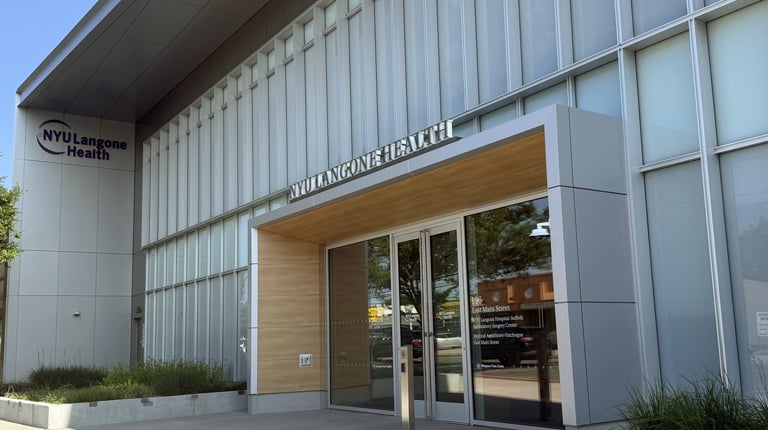
As more patient care moves into ambulatory facilities, physician practices, community settings, and repurposed commercial spaces, institutions are motivated to rethink how their hospital facilities function and service their communities.
VHB: What changes when institutions stop thinking about healthcare as a building and start thinking about the broader system?
David: It changes the whole conversation. Instead of asking whether a program fits in a building, institutions need to ask how their facilities can support the health system’s vision, strengthen synergies across service lines, and adapt to evolving models of care. That means looking at whether the buildings, campus, surrounding infrastructure, and community access points work together effectively and efficiently.
For years, institutions have often placed programs wherever space is permitted and available. Now, they're stepping back and asking better questions while investing more time into the planning. What programs must be adjacent? What can move into the community? What are the programs and modalities that support the mission, and which ones are starting to work against it?
That broader view matters in New York City because real estate is limited and expensive. Every decision has a ripple effect. A change in one building can affect patient movement, staff workflow, loading, utilities, curb activity, traffic, and the surrounding neighborhood. That's why the best planning conversations start with the full ecosystem, not just the floor plan.
VHB: Does that mean the hospital is becoming less important?
David: Not less important. More intentional.
Hospitals will continue to play a critical role, but they don’t have to be the destination for every type of care. As more services move into ambulatory and community settings, institutions can be more thoughtful about what their major campuses are designed to accommodate.
That creates an opportunity to build around what an institution does best. A campus might become known for complex surgery, cancer care, trauma, or another specialized service while routine or lower-acuity care happens in ambulatory settings elsewhere.
VHB: Is that driving interest in converting commercial and retail space to healthcare uses?
David: Absolutely. Where real estate is at a premium, and in short supply, repurposing existing buildings has become very attractive. Healthcare is moving closer to where people live and work, which may mean an ambulatory facility in a former retail location, medical use in a commercial building, or a more distributed network of care.
But adaptive reuse for healthcare isn't a shortcut. A building in the right location still has to be the right building. Healthcare brings different demands around structure, ceiling height, utilities, loading, patient access, and operations. You have to understand those constraints early, or you can end up forcing a use into a facility that cannot support it.
The opportunity is still significant because these locations can bring care closer to where people live. But the building has to be evaluated as part of the larger care network, not as a standalone real estate deal.
VHB: Where does technology fit into all of this?
David: Technology is making the physical environment more demanding and less predictable.
AI-supported patient monitoring, telemedicine, advanced imaging, and other tools all sound like clinical decisions, but they quickly become infrastructure decisions.
Where do cameras go? Is there enough power? Can the building handle the data needs? Is there room above the ceiling? Can the patient room support the experience clinicians and patients expect?
That’s why I don’t think institutions can separate technology planning from facility planning anymore. If we know the next generation of care will continue to evolve, we need to design buildings that can respond to things we can’t fully predict today.
VHB: What will separate successful institutions over the next decade?
David: I think it will come down to adaptability.
Successful organizations won't necessarily be the ones with the newest buildings or the largest campuses. They'll be the ones that understand how all their assets work synergistically and evolve as healthcare changes.
No one knows exactly what care delivery will look like 10 years from now. But we can be fairly certain that it won't look exactly like it does today.
The institutions that are prepared for that reality will be the ones that build flexibility into their decisions today. It’s less about predicting the future and more about creating environments that can adapt when the future arrives.
Explore how VHB helps institutions connect planning, infrastructure, mobility, and technology to support the future of care.