Today, many cities are going through a major transformation to focus on more sustainable, people-based designs, changing how these spaces look, operate, and feel. In Connecticut, communities are bringing pedestrian-friendly, multimodal networks to the forefront and moving away from prioritizing vehicle-centered infrastructure. VHB has supported several projects across the state that are reimagining mobility to build open, accessible, and people-focused spaces that will improve connectivity for all road users.
Safety, Livability, and Accessibility Improvements for All Road Users
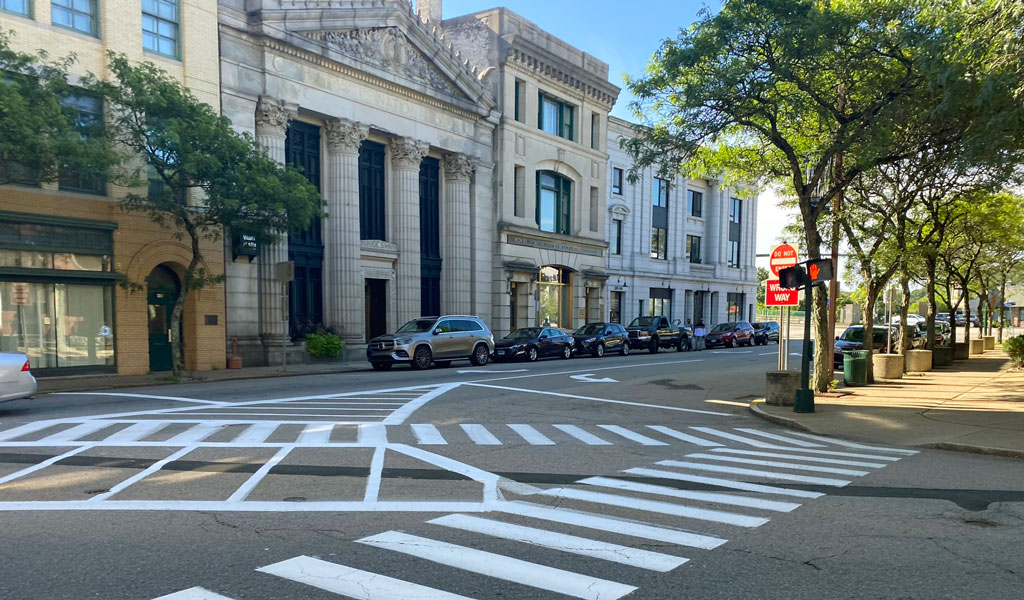
VHB partnered with the Southeastern Connecticut Council of Governments (SECOG) and the City of Norwich to rethink connectivity in the City’s downtown area with the Chelsea Harbor/Downtown Norwich Mobility Study. Centering pedestrian and bicycle accommodations, traffic circulation, parking, and trail connections, the study aimed to create a more efficient, safer, and accessible urban environment.
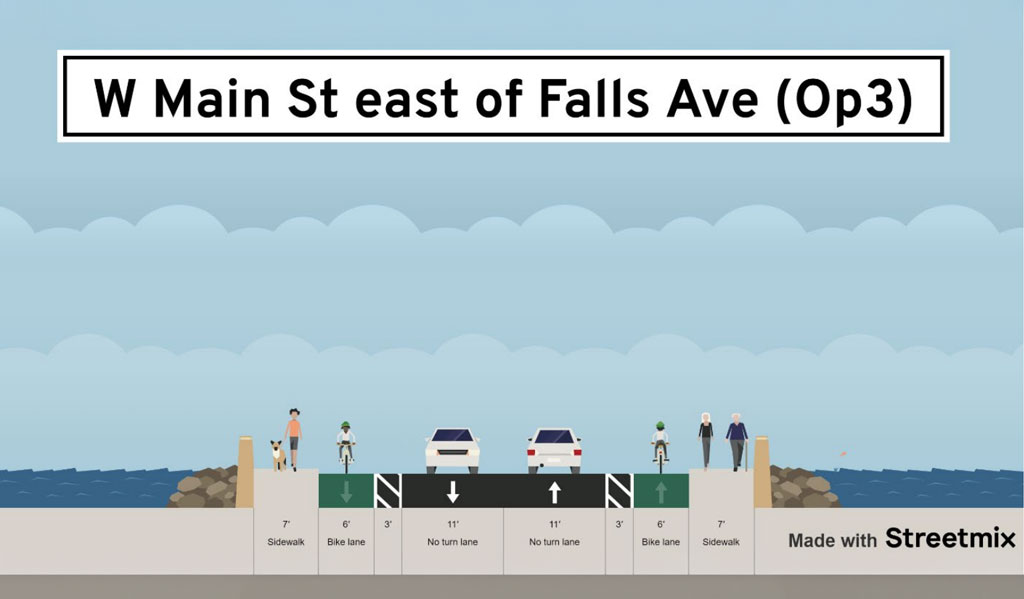
To break down existing barriers between Downtown Norwich and the City’s waterfront area, our team proposed reconfigurations of multi-lane, high-speed thoroughfares, as well as new bicycle facilities and sidewalk network improvements. The recommended enhancements will create a more welcoming, efficient, and people-focused urban environment.
A People-First, Pedestrian-Friendly Approach to Campus Design
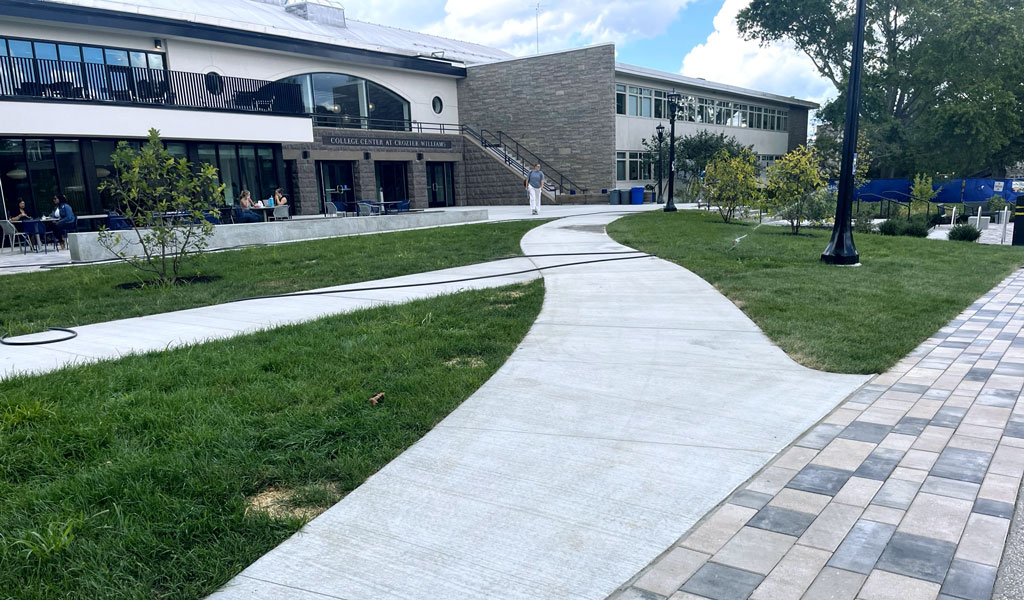
As modern college campuses move away from car-focused grids, planners are pushing parking to the perimeters and repurposing lots into multi-use green spaces that enhance campus identity. VHB has been collaborating with colleges and universities in Connecticut to create open, accessible, and multimodal spaces, strategically right-sizing parking supply while building a more walkable, better-connected campus.
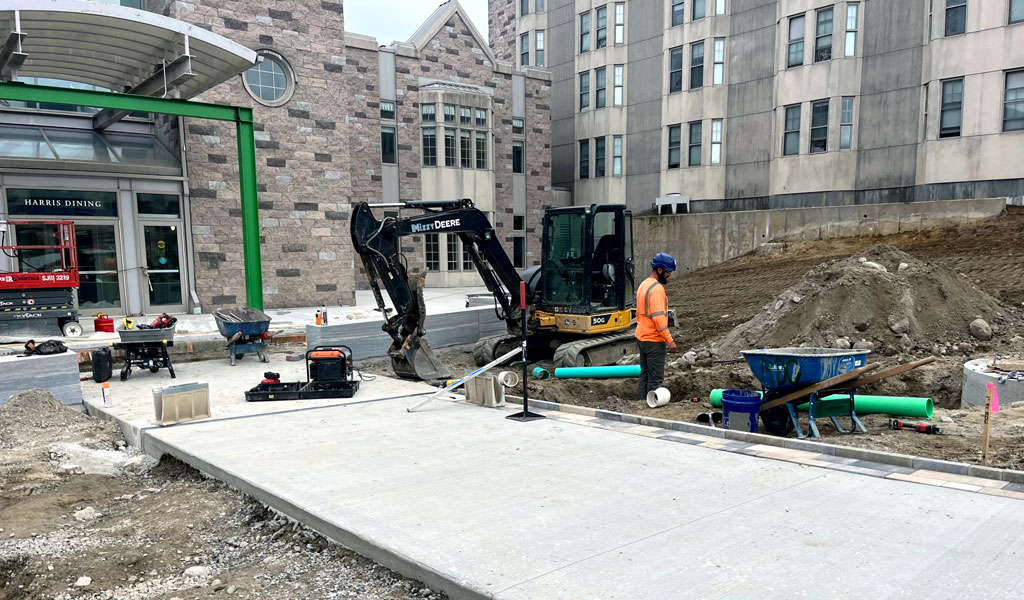
Partnering with Connecticut College, VHB is supporting the Crozier-Plex Pedestrian Connector Project to transform the pedestrian experience at the core of campus. A pedestrian safety study previously identified the project as a key initiative to minimize pedestrian-vehicular conflict on campus. The project will remove the roadway and parking lot between the College Center at Crozier-Williams (the “Cro”) and the North Complex (the “Plex”)—two buildings at the heart of campus. Creating a unified, multi-use open space, the project will more effectively link these two buildings and redistribute parking throughout the campus.
Enhancing Connectivity through Efficient Public Transit
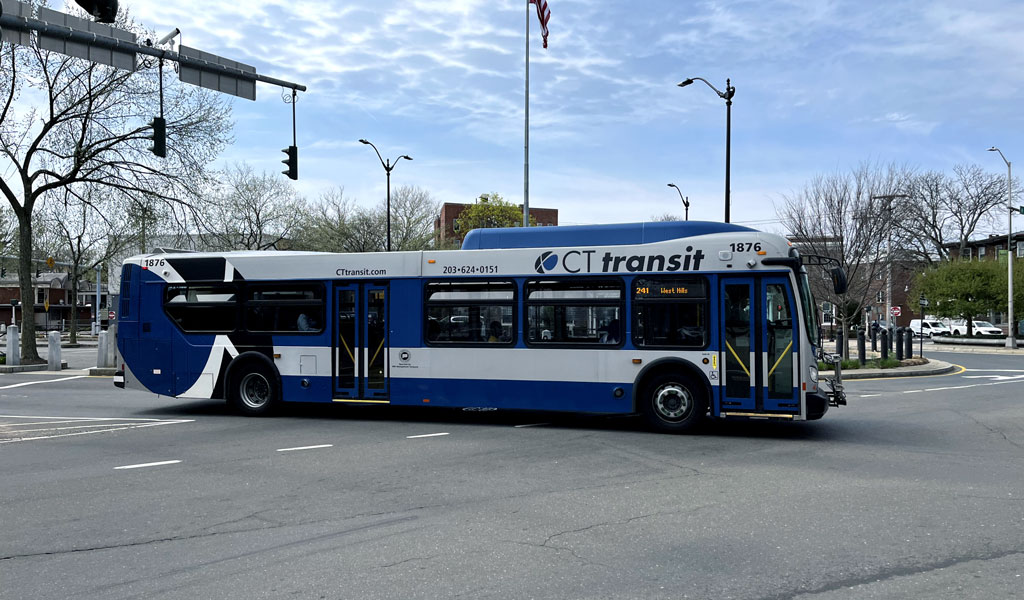
In the greater New Haven area, VHB is supporting the state’s first bus rapid transit (BRT) system, a high-quality network that delivers fast, comfortable, and cost-effective services at metro-level capacities. BRT elements include dedicated lanes with busways and stations, off-board fare collection, transit signal priority, smart bus technologies, unique branding, and fast and frequent operations.
The New Haven region’s new system will feature two BRT corridors—routes that make limited stops as they travel from the far reaches of one side of the city to the other, covering more than 14 miles of roadway. To make the BRT service efficient, dedicated bus lanes in areas of heavy traffic and a transit signal priority (TSP) system for buses at several intersections are proposed. VHB is currently working with the Connecticut Department of Transportation (CTDOT) and the City of New Haven on a demonstration project that will test the effectiveness and applicability of several cloud-based TSP systems.
Discover how our planners and designers collaborate with communities to build better, more connected neighborhoods.