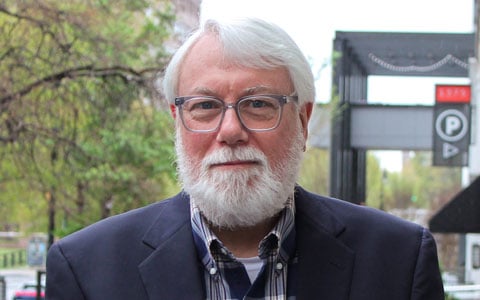
John Fish is VHB’s Director of Landscape Architecture in Atlanta, where he leads a team focused on creating thoughtful, functional, and engaging outdoor spaces. From higher education campuses to urban and suburban parks, his work centers on how people experience and interact with the built environment.
In recognition of World Landscape Architecture Month, we sat down with John to talk about what drew him to the profession, what keeps the work fresh, and how his team approaches design across a wide range of projects.
VHB: What drew you to landscape architecture, and what’s kept you passionate about it over the years?
John: My interest took root early in childhood. Both of my parents were avid gardeners and deeply involved in conservation, so I spent a lot of time outdoors. In high school, I was introduced to architecture and became fascinated by the design process. Around that same time, through a connection my dad had, I met a local landscape architect and seeing the kind of work they were doing made a lasting impression. That’s really what set me on this path.
What’s kept me engaged over the years is the variety. No two projects, sites, clients, or challenges are ever the same, which keeps the work fresh and interesting. Most rewarding of all, though, is watching a project come to life. It often begins as a rough sketch, sometimes on a piece of scrap paper, and you help it evolve all the way through detailed design into something tangible. During construction, you see it emerge from the ground and take on its intended three-dimensional form. Finally, we get to see how people actually use the spaces, often with joy, and often in ways you never anticipated. That is what makes it all worthwhile.
VHB: Tell us about your team. What makes your landscape architecture group unique?
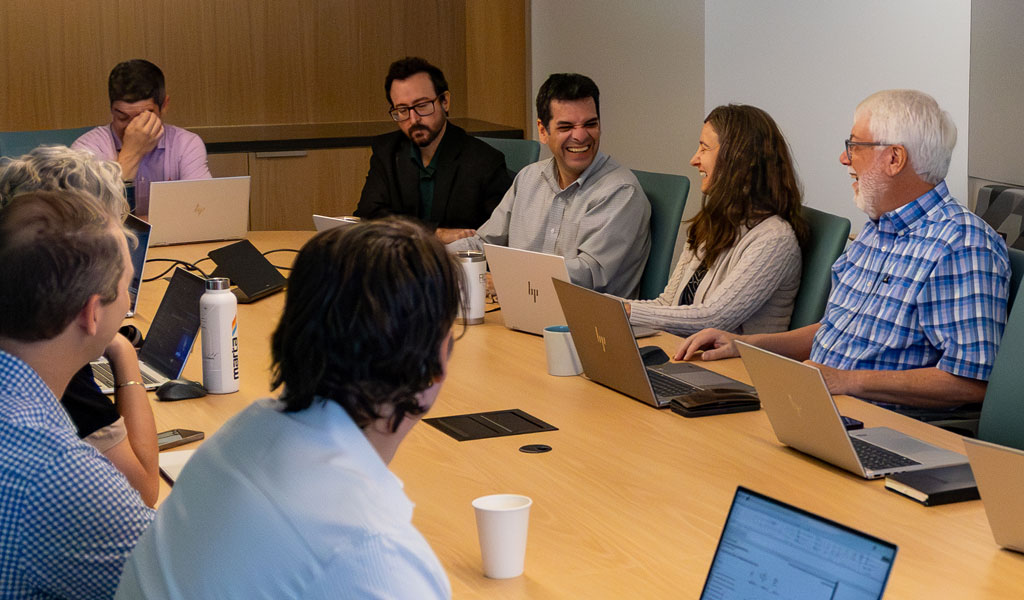
John: Most of our group has been working together since 2011, so we know each other really well. We understand each other’s strengths and know how to complement them, which makes us more effective as a team.
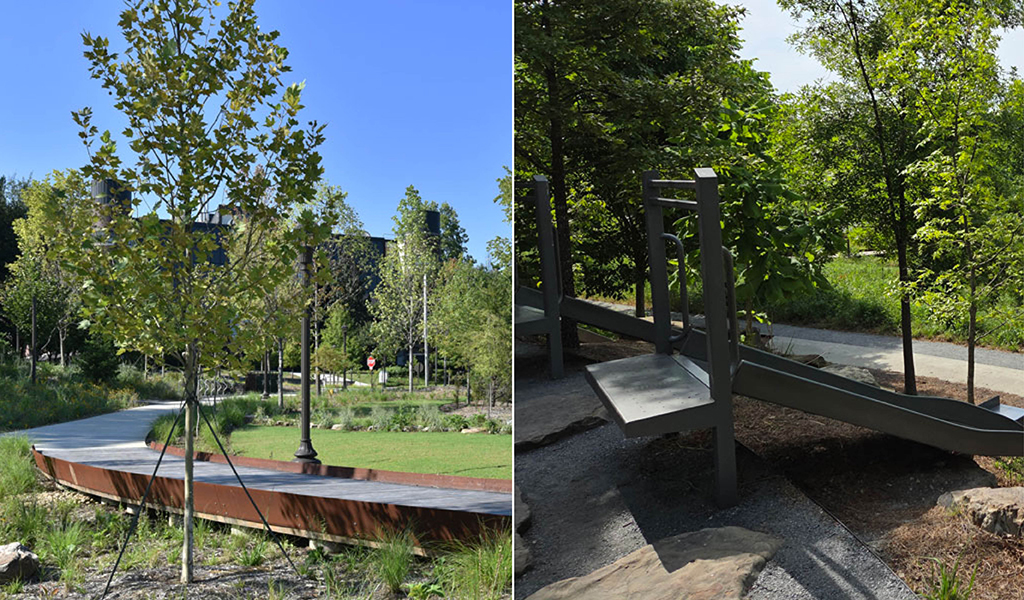
We have a good balance of skills across the team. Raigan Carr, Senior Landscape Architect, brings deep knowledge in native plants, sustainability, and park planning—with experience ranging from system-wide park master plans to specialized spaces like accessible playgrounds, Chuck Ehmcke, Project Manager and Senior Landscape Designer, focuses on the technical side: construction documentation and detailing, and making sure that what we design can be built the right way. He spends a lot of time in the field, working alongside contractors and helping establish the quality of the built project through construction. Annie Rochner, Landscape Designer, rounds out the team on the technology front, handling CAD production, Land FX, Sketch-up, and Photoshop. And having spent a few decades in this field, my focus tends to center on design process, interdisciplinary collaboration, project context, and client goals, all in service of delivering a quality project.
I think that mix of big-picture thinking, extensive background, and detailed execution allows us to carry projects from early concepts all the way through implementation. It’s also what enables us to take on more complex work, particularly in environments like university campuses where expectations are high and every decision matters.
VHB: Some of your work, like your long-term involvement at Georgia Tech, has allowed you to see projects evolve over time. What stands out about designing in a setting that’s constantly changing, and how do partnerships shape the outcome?
John: A significant portion of our work has been in higher education, and Georgia Tech is a great example of what that kind of long-term partnership looks like. We’ve been working on campus for more than a decade, supporting everything from plans and stormwater strategies to streetscape improvements and public realm design. What stands out about that work is the depth of collaboration and the level of expectation. University clients tend to push us to be more thoughtful and more creative, and that’s something we really value.
One project that reflects this well is the EcoCommons at Georgia Tech, where we helped transform an eight-acre section of campus into a multi-functional green space supporting environmental research, student wellness, biodiversity, and Atlanta’s cultural history. It’s the kind of project that demonstrates how landscape architecture can bring many different goals together into one cohesive, meaningful space. We collaborated with two great firms on that project: Nelson Byrd Woltz Landscape Architects and Biohabitats.
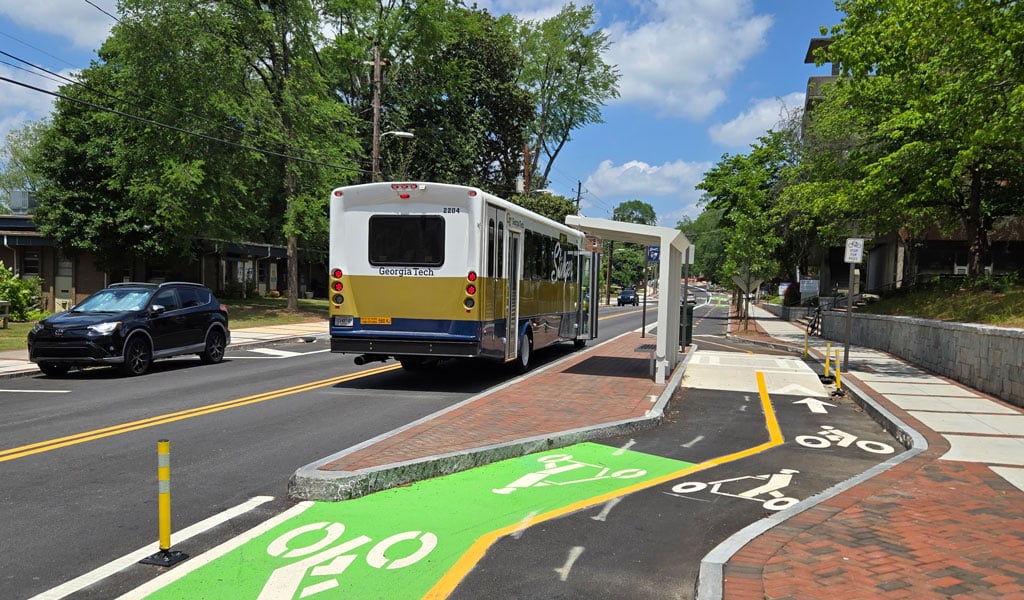
We’ve also taken on complex streetscape projects where the challenge is balancing the needs of pedestrians, cyclists, transit users, vehicles, and special events in a way that improve both safety and mobility—and look great. Georgia Tech’s East Campus cycle track project is a good example of how close cross-disciplinary coordination can turn a vision into reality. Toole Design Group was our partner on that project.
That spirit of collaboration defines how we approach all our work, both within our project team and across VHB. Being a part of a multi-disciplinary firm means we can draw on skills from civil engineering, transportation, environmental services, and beyond, which gives us a richer technical understanding of context and helps us deliver more integrated, effective solutions.
John’s work reflects what World Landscape Architecture Month is all about: creating spaces that connect people to place. Whether on a campus, in a park, or along a streetscape, he and his team’s focus remain the same—designing environments that are thoughtful, sustainable, and built to be used.
Connect with John via email and explore VHB’s landscape architecture services.