VHB is helping hospitals, private developers, and public agencies plan and design helipads that support critical operations today while preparing for the future of aviation. Through projects across the country, including recent work in Massachusetts and Florida, VHB’s teams are creating safe, compliant, and adaptable landing facilities that serve everything from emergency medical flights to scalable private aviation needs.
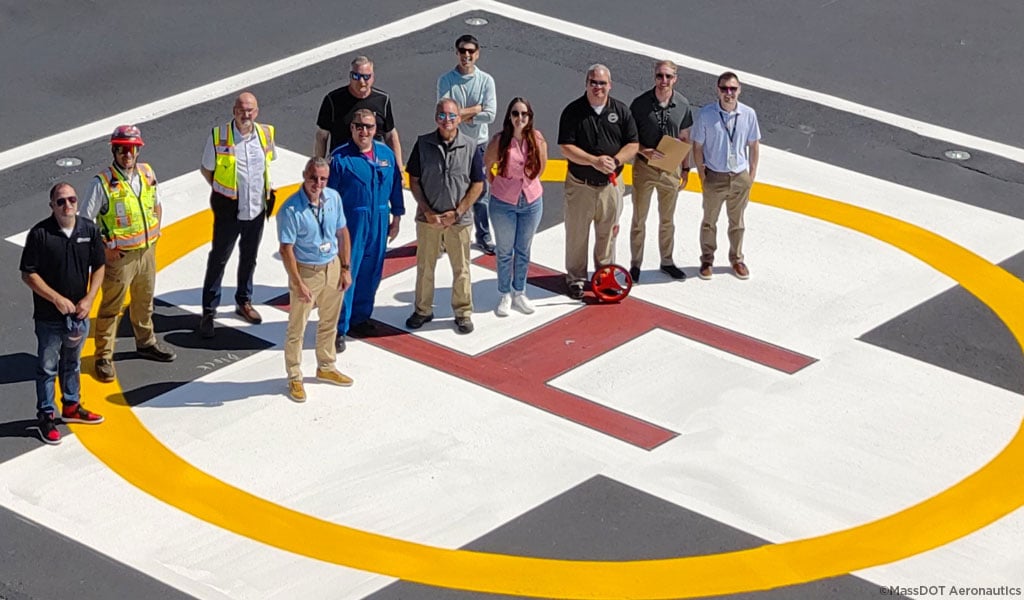
Helipad design grew naturally from VHB’s long-standing experience in healthcare land development. As hospital clients began asking for help navigating increasingly complex aviation requirements, the team built a strong foundation in Federal Aviation Administration (FAA) coordination, airspace studies, and multi-agency permitting. Today, VHB supports clients every step of the way through evaluating existing helipads for safety and compliance, designing new rooftop and ground-based facilities, securing federal, state, and local approvals, and providing construction administration to bring projects online smoothly. In one recent project, the team developed a temporary helipad solution to keep emergency medical flights operating while a new permanent facility was being built, allowing the hospital to remain fully operational and continue serving its community throughout construction.
“Designing a helipad means balancing aviation requirements with the realities of a busy healthcare campus,” said Marisa Blackwood, VHB Project Manager. “We’re thinking about airspace, safety, hospital circulation, and regulatory coordination all at once. When those pieces come together well, the facility can support critical operations reliably every day.”
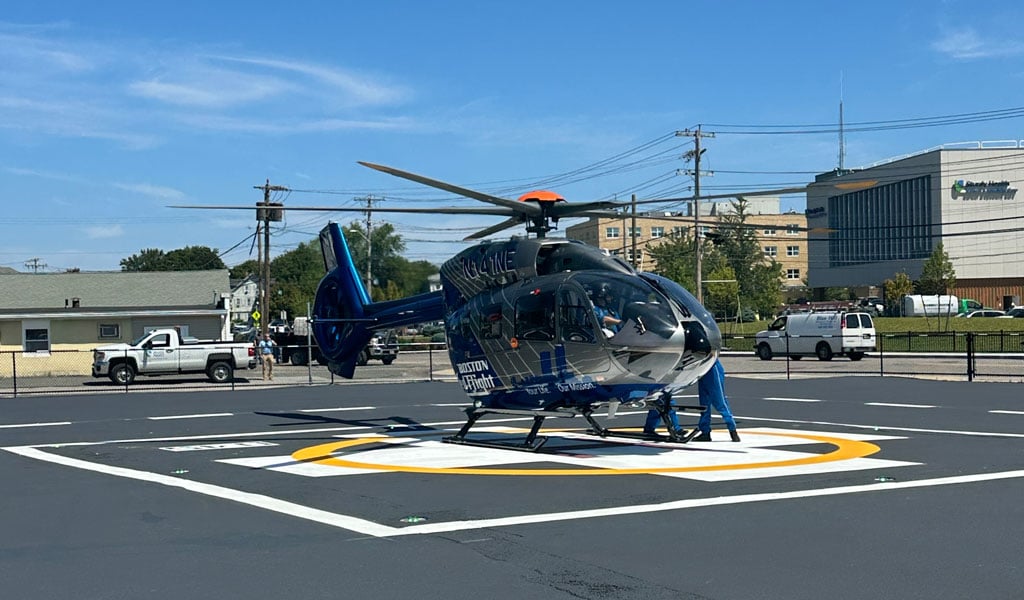
Looking ahead, VHB is designing helipads with flexibility in mind. Facilities are planned to accommodate larger aircraft over time and, when appropriate, to transition easily into future vertiports for electric vertical takeoff and landing (eVTOL) vehicles and drones. While advanced air mobility is still emerging, VHB is already helping municipalities explore what it could mean for their regions through feasibility studies, policy development, and stakeholder engagement. This future-focused approach allows today’s helipads to evolve alongside new aviation technologies.
By combining technical know-how, regulatory insight, and people-centered design, VHB is turning helipads into resilient, future-ready infrastructure that support communities when they need it most while laying the groundwork for new mobility options for people and goods.
Want to learn more about how VHB is shaping the future of aviation infrastructure? Visit our website to explore our aviation and advanced air mobility services.