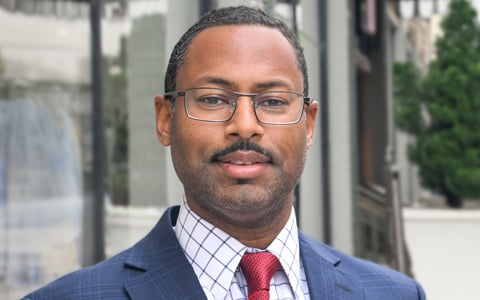
After more than two decades in rail and transit, including leadership roles at the Washington Metropolitan Area Transit Authority (WMATA), Ravi Amin recently joined VHB as the Mid-Atlantic Director of Transit and Rail Engineering, based in our Washington, DC, office. Ahead of the American Railway Engineering and Maintenance-of-Way Association (AREMA) Annual Conference, we sat down with Ravi to discuss owner-side insight, passenger rail opportunities, and mentorship.
VHB: You recently joined VHB. What attracted you to the company?
Ravi: Throughout my career, I've been drawn to organizations focused on delivering great projects, building strong relationships, and supporting a collaborative culture. David Wilcock first introduced me to VHB when we served together on a Transit Cooperative Research Program (TCRP) panel. As I considered my next step, I saw VHB making strategic investments in transit and rail and bringing together talented professionals across the country.
The opportunity to help grow the practice while working alongside people who are passionate about solving complex transportation challenges felt like the right fit.
VHB: You've worked on both the owner and consultant sides of the industry. How does that influence your approach to client service?
Ravi: Having spent time on both sides of the table, I understand the pressures agencies face. They're balancing budgets, schedules, operational requirements, public expectations, and long-term asset management concerns, often all at the same time.
That perspective helps me start with what clients are trying to accomplish—not just the scope in front of us. My goal is to help them navigate challenges and advance solutions that are practical, implementable, and aligned with their broader needs.
VHB: What do you see as some of the biggest opportunities for passenger rail agencies today?
Ravi: Agencies have an opportunity to modernize systems that have served communities for decades. We're seeing significant strategic investments in high-profile infrastructure, but agencies also need to address less visible needs that are just as critical to safe, reliable service.
The challenge isn't just designing something that works today. It's creating solutions that support operations, growth, and evolving customer expectations over time. That requires collaboration across disciplines and a willingness to think beyond traditional approaches.
VHB: You've spent much of your career focused on track engineering. What continues to interest you about the work?
Ravi: What fascinates me is that track engineering touches so many aspects of a transportation system. People often look at track as just rails and ties, but there's an incredible amount of science, planning, and coordination behind it.
I've always enjoyed understanding not only how track works, but how it interacts with structures, power systems, train operations, and the passenger experience. The most successful solutions are often the ones carefully tailored to a client's specific operational needs.
VHB: Mentorship has been a significant part of your career. What have you learned from working with younger engineers?
Ravi: Mentorship is one of the most rewarding parts of the profession. Every person grows differently, and part of being a mentor is understanding how to support that growth while also learning from the people you're guiding.
Some of the best moments come when an engineer starts applying lessons independently and finding solutions on their own. That's how our industry continues developing the next generation of leaders.
Learn more about how VHB helps advance transit and rail infrastructure.