VHB is partnering with Metropolitan Atlanta Rapid Transit Authority (MARTA) to evaluate how a new automated transit network (ATN) system could provide a new form of mobility to communities in South Metro Atlanta, including Hartsfield-Jackson Atlanta International Airport. This feasibility study is complementary to an ongoing pilot demonstration project, led by a partnership of ATL Airport Community Improvement Districts (AACIDs) and MARTA, which recently broke ground and is anticipated to begin operations at Georgia International Convention Center in winter 2026.
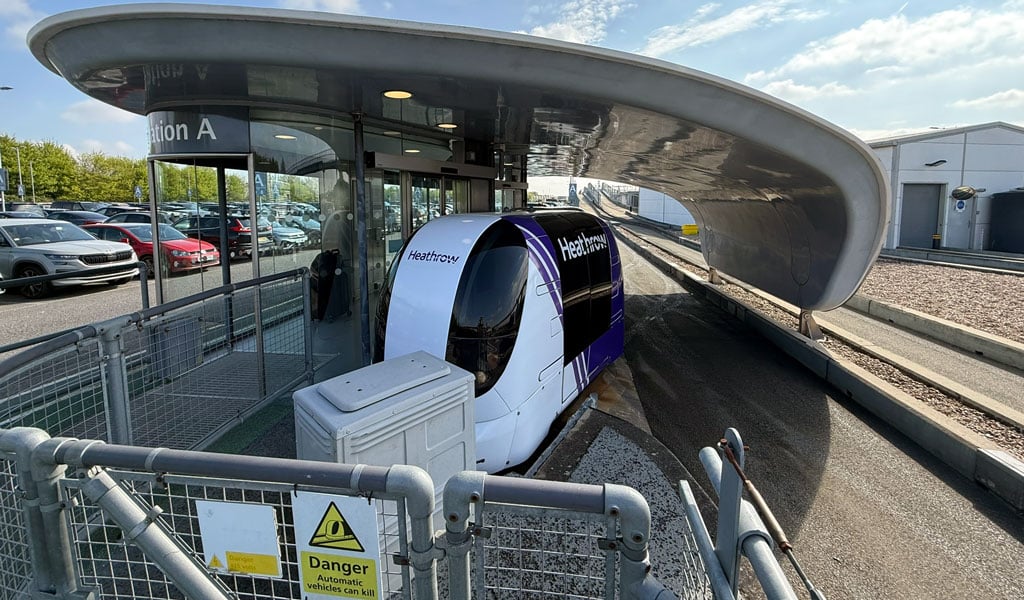
Automated transit is familiar to many airport travelers, typically in the form of larger people-mover trains connecting terminals. In this case, MARTA is studying the feasibility of using smaller, personal automated “pods” operating on lighter infrastructure. VHB worked alongside MARTA to create a long-term build-out concept, and is now analyzing how this type of system could operate on a single corridor.
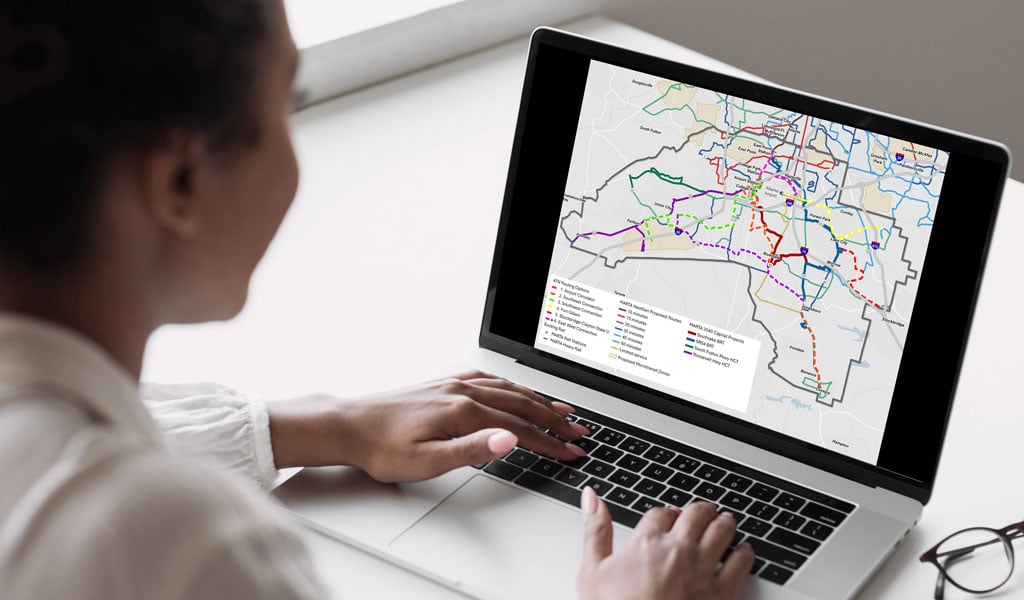
The ongoing feasibility study examines an area of roughly 260 square miles, mapping eight potential routes extending from the airport to serve surrounding communities without existing transit access. Our team is assessing ridership demand, right-of-way constraints, potential fare structure, and other operating characteristics to determine where ATN service could complement existing and planned transit investments.
“This project is giving us the chance to combine something very familiar—transit planning—with something entirely new,” said Curt Ostrodka, Director of Smart Communities at VHB. “Automated transit networks are still an emerging technology, and there is not an established playbook to follow. Our team has studied systems operating around the world and translated those insights into design parameters that make sense for South Metro Atlanta.”
With an overall concept established, the study is now focusing on analyzing a southeast connection from the airport, as identified by the project’s governance committee. VHB is evaluating fare structures, projected ridership, and long-term operational viability for this corridor while coordinating with other regional efforts, such as the Southlake Bus Rapid Transit (BRT) study, to assure the automated transit network would provide complementary service.
The knowledge VHB is building through this work—combining transit planning, GIS, technology, and urban planning experience—is also helping inform how automated transit networks could support airports, college campuses, and high-capacity transit corridors in other regions.
To learn more about how VHB is helping clients explore new mobility solutions and automated transit networks, visit our New Mobility e-book or connect with Curt to continue the conversation.