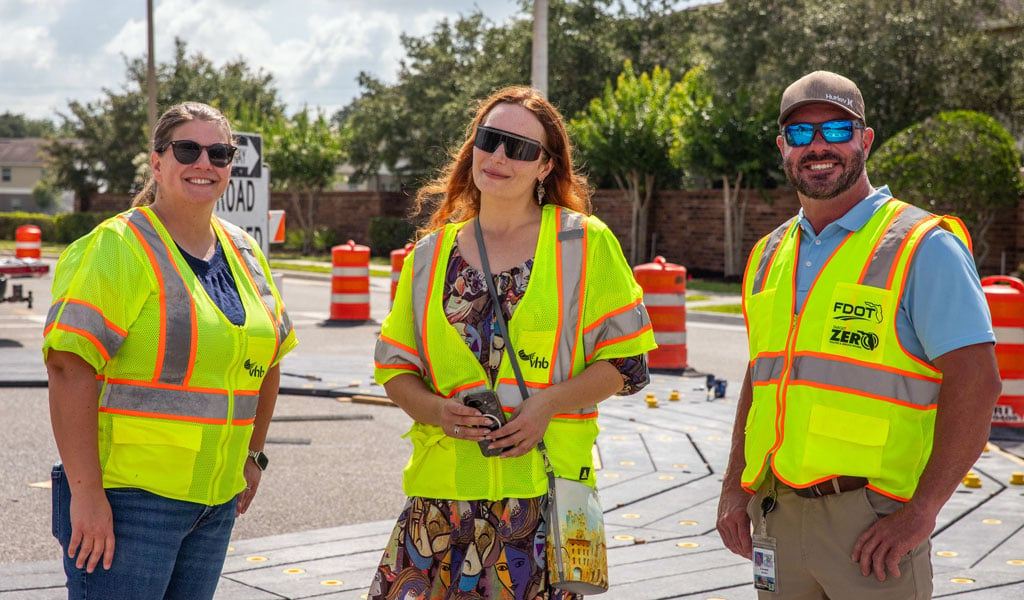
VHB helped Orange County, Florida, implement an innovative new approach to intersection safety with Florida’s first modular roundabout—constructed in three weeks. Located at Wyndham Lakes Boulevard and Roderick Circle in a residential area near Orlando International Airport, the project will improve traffic operations and safety while reducing construction time, cost, and disruption for travelers.
The project grew out of an earlier VHB study that evaluated the busy intersection and helped Orange County be ready to move forward when a modular option became available. VHB then completed the final design using the new modular system, supporting the County’s goal of piloting a more flexible, lower-cost alternative before investing in a permanent installation. Orange County’s Traffic Engineering team worked side-by-side with VHB, and played a critical role during procurement, construction, and inspection.
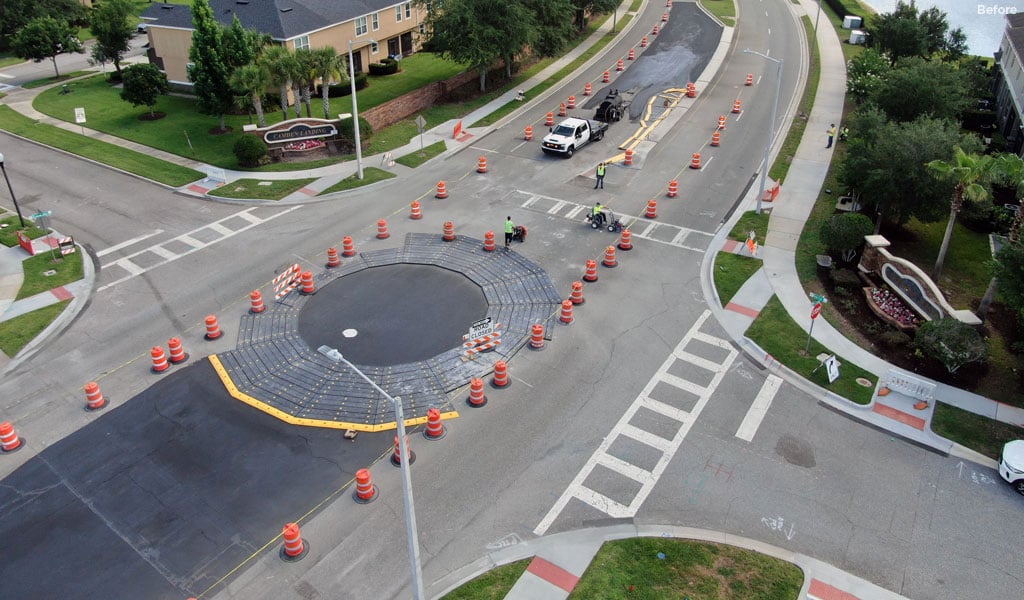
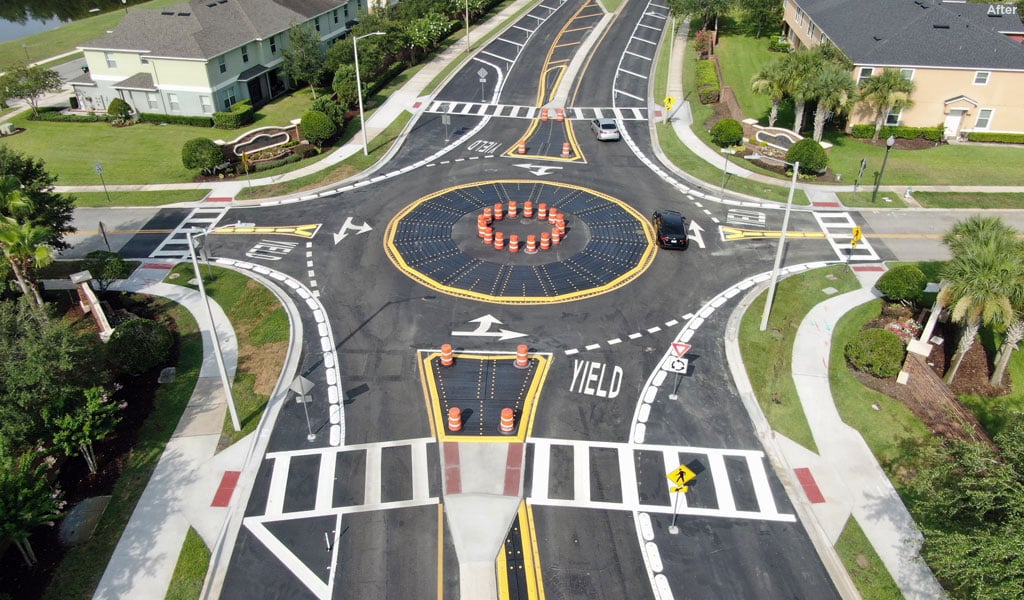
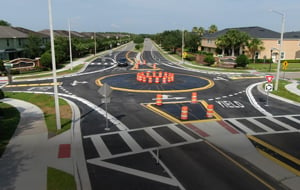
From week one (before) to week three (after) of construction, VHB helped Orange County pilot a modular roundabout at Wyndham Lakes Boulevard and Roderick Circle—the first installation of its kind in Orange County.
“This new solution improves safety at intersections by putting in a roundabout at a much lower cost in a very short timeframe,” said Juan Camacho, VHB Director of Traffic Engineering–Traffic Operations. “From a construction standpoint, Orange County’s pilot took only about three weeks. A normal roundabout would probably take six months to a year.”
That speed is a meaningful advantage for state and local governments working under budget and schedule constraints.
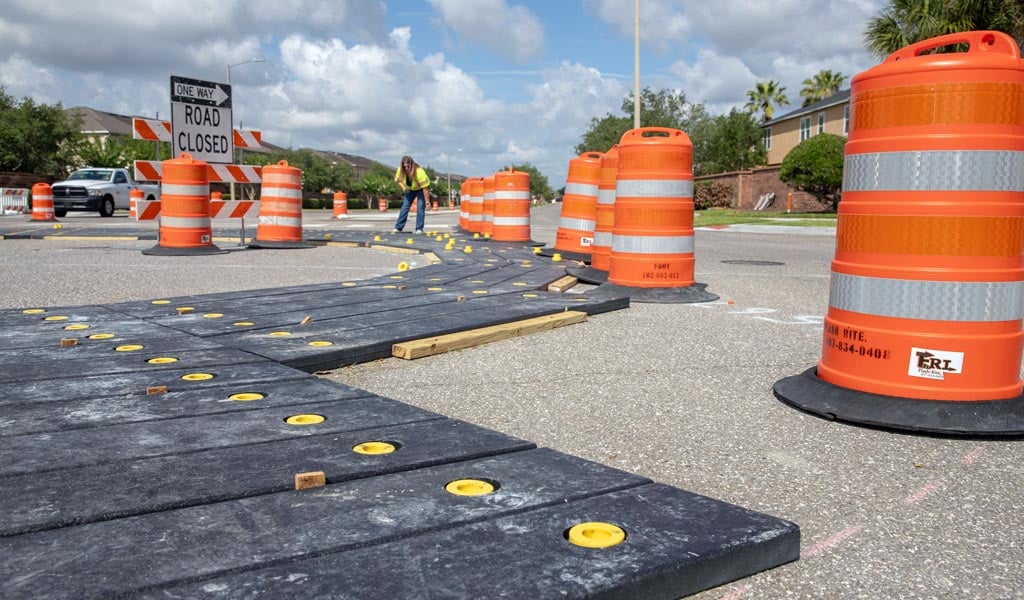
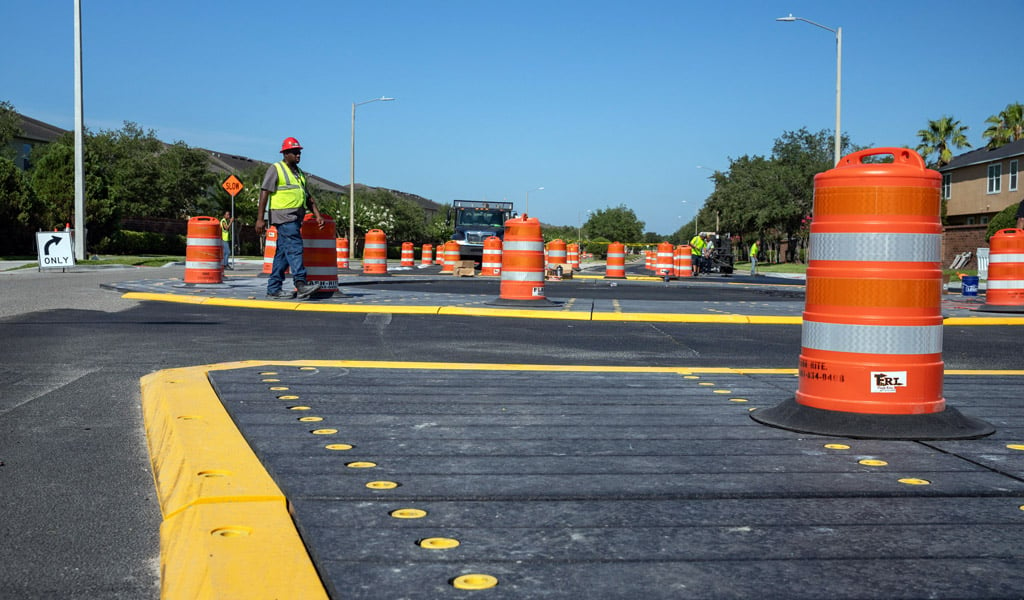
Because the modular system is installed over the existing roadway footprint, agencies can avoid much of the reconstruction, traffic control complexity, and prolonged disruption often associated with conventional curb-and-concrete roundabouts.
The modular approach also gives owners flexibility: if travel patterns evolve, public feedback suggests changes, or funding becomes available for a permanent upgrade, the installation can be modified more easily than a traditional build.
The roundabout consists of a series of modular boards, anchors, and impact-absorbing plugs that attach directly to existing asphalt or concrete. The recycled composite polymer components are customizable for 3D printing in shape, size, and color, designed for heavy loads and all-weather conditions, and can be installed in days rather than months.
For VHB, the project reflects a broader commitment to helping public-sector clients move from analysis to implementation with practical, context-sensitive solutions. In Orange County, that means pairing roadway safety professionals with a quick-build design strategy that can help teams act sooner, spend more efficiently, and deliver visible safety improvements with less impact on residents and road users.
Learn more about VHB’s approach to safety on our roadways.