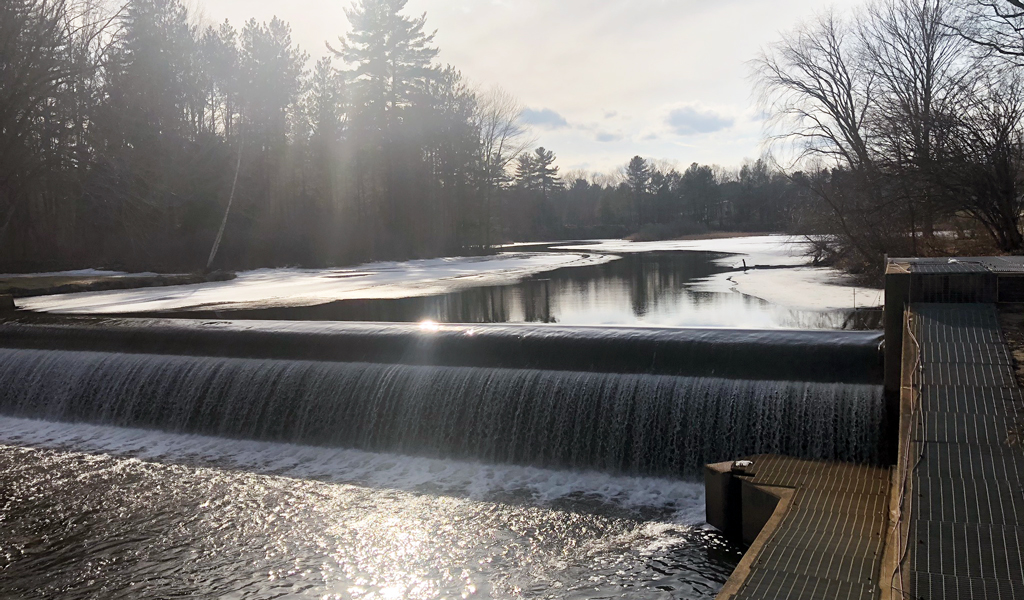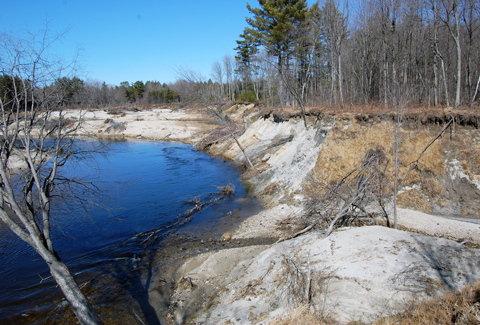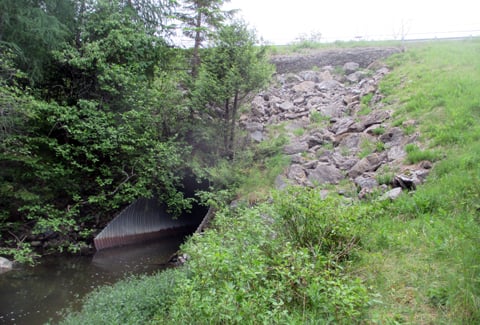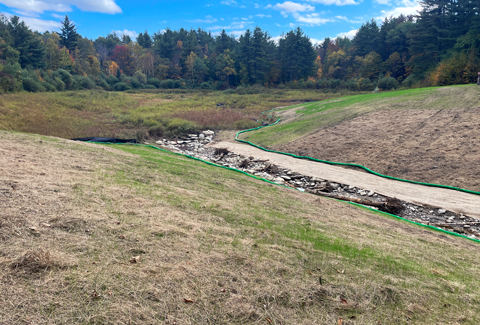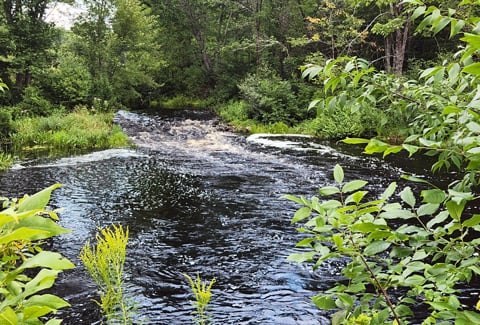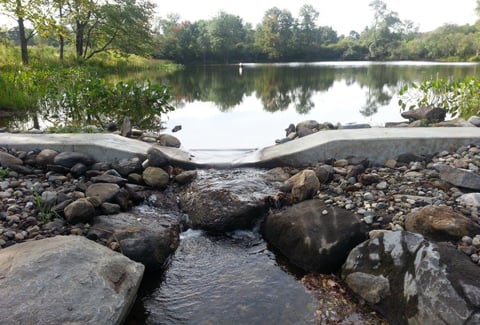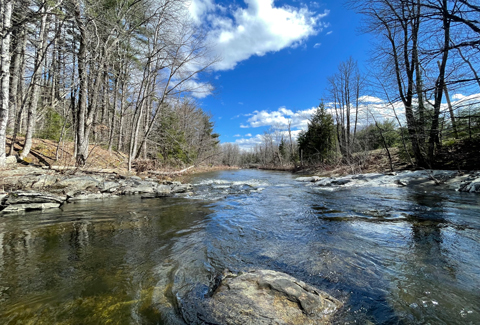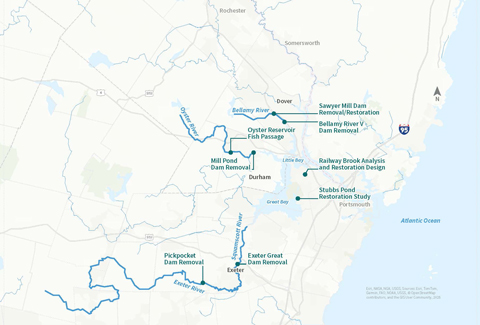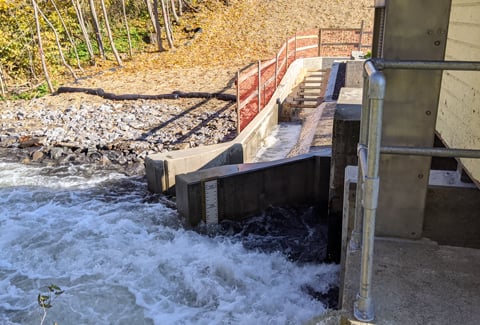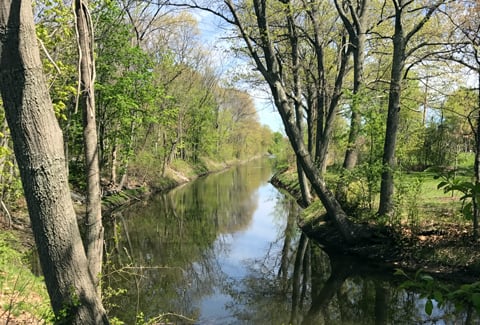
VHB helped the Town of Durham move from years of debate over the aging Mill Pond (Oyster River) Dam to a science-based decision and implementable solution that addressed safety, water quality, and ecological concerns.
When faced with a structure that failed New Hampshire Department of Environmental Services dam safety standards, could not safely pass a 50-year storm, and contributed to declining water quality in Mill Pond, Durham turned to VHB to help:
- Evaluate the engineering, environmental, historic, and financial implications of dam removal versus retention, giving the Town a clear understanding of risk, cost, and long-term liability.
- Develop a dam removal plan that eliminated the unsafe concrete structure and fish ladder while maintaining the abutments, reshaping the Oyster River channel, and managing approximately 5,500 cubic yards of accumulated sediment to stabilize the system.
- Integrate invasive species control into the restoration approach to prevent reinfestation of the newly exposed channel and banks.
The resulting project reduces Durham’s flood risk, restores a more natural flow regime to improve water quality, and supports recovery of anadromous fish populations in the Oyster River, while enhancing the community’s resilience to future climate-driven sea-level rise.