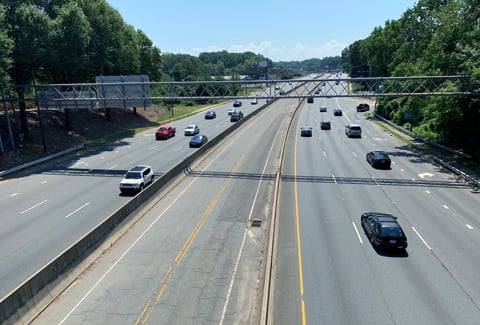
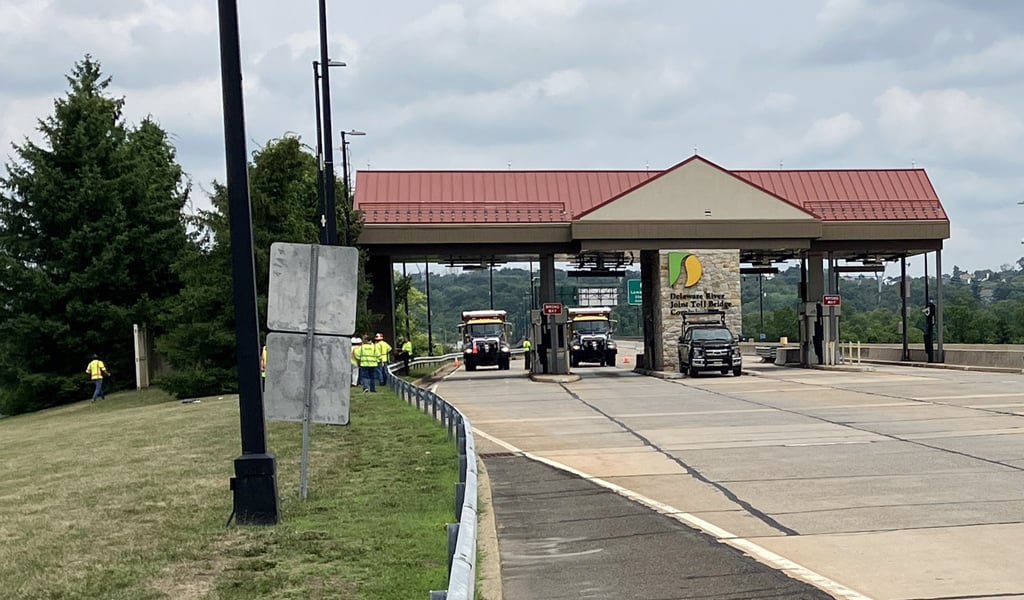
The Delaware River Joint Toll Bridge Commission (DRJTBC) is advancing a systemwide modernization program to convert traditional stop-and-go toll plazas along the Delaware River to cashless, all-electronic tolling. The New Hope—Lambertville Toll Bridge marked a major milestone as the first DRJTBC crossing to complete this transition, establishing a model for future bridge conversions.
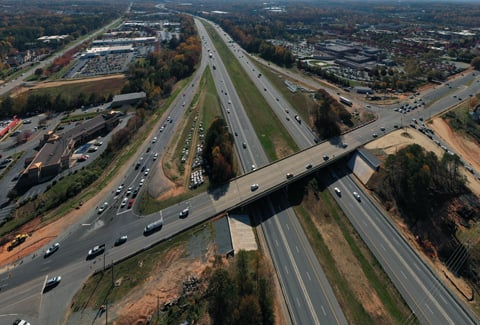
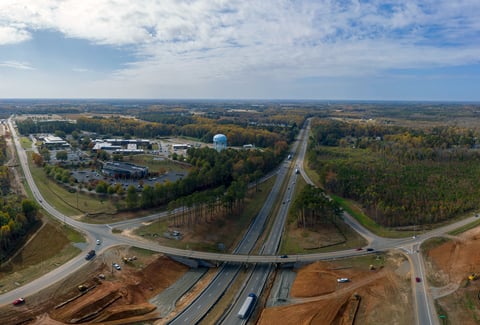
This shift to open-road tolling removes the need for vehicles to slow or stop, addressing long-standing safety, congestion, and operational challenges associated with legacy toll infrastructure. VHB supported this transition by helping reconfigure roadway environments previously shaped by toll collection operations.
VHB’s work focused on maintaining safe traffic flow during construction while setting the foundation for long-term operational improvements once facilities are fully converted. This included planning for temporary traffic patterns, updating roadway lighting and monitoring systems, and coordinating closely with the client and project partners to minimize disruption.
By supporting a phased approach to construction—beginning with gantry installation and system testing and followed by toll plaza demolition and roadway reconstruction—VHB has helped transform constrained, stop-and-go corridors into safer, more efficient facilities. The result is improved mobility, reduced congestion and emissions, and a streamlined transportation experience that reflects the future of tolling along the Delaware River.
New Hope—Lambertville Toll Bridge All Electronic Tolling Conversion
Multiple Locations
Client
-
Delaware River Joint Toll Bridge Commission
Services
-
Cost Estimating
-
Highway/Roadway Design & Engineering
-
Maintenance & Protection of Traffic
-
Traffic Management & Operations